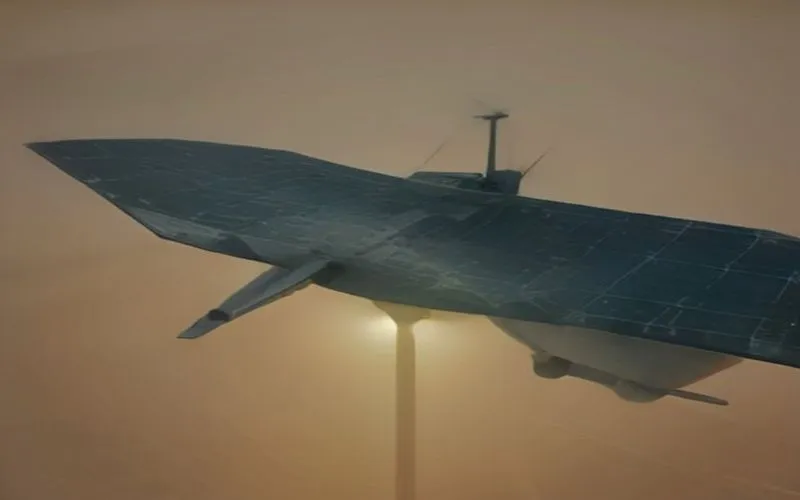
For decades, the aerospace industry has been governed by a singular, unforgiving metric: mass. Escaping Earth's gravity well meant that every single kilogram added substantial expense and engineering complexity, driving the multi-billion-dollar satellite programs of the 20th century. However, falling launch costs enabled by commercial space innovation have fundamentally altered this paradigm. Today, mass is no longer the absolute sovereign of spacecraft design, shifting the primary engineering bottlenecks toward more complex parameters like power generation, thermal management, and physical volume.
The Shift from Mass Budgets to Power and Thermal Limits
As rideshare pricing and reusable rockets make lifting hardware significantly cheaper, satellite manufacturers are reinvesting their mass budgets into structural margins, redundancy, shielding, and propulsion. Yet, this newfound freedom has exposed a secondary set of engineering limitations. Modern payloads—including high-throughput phased-array antennas, demanding on-board compute clusters, and electric propulsion systems—require immense electrical power. Every watt consumed inside a satellite eventually generates heat, turning thermal radiation and power collection into the new critical path.
Consequently, dry mass tells only a fraction of the story. Deployed surface area, packaging efficiency, mechanism burden, and delivery timelines now dictate whether a spacecraft can fulfill its operational lifespan. Without sufficient surface area for solar collection and heat rejection, high-performance payloads cannot achieve their necessary duty cycles, rendering extra mass irrelevant if power cannot keep pace with ambition.
The Tyranny of Volume and Deployment Mechanisms
While mass can be traded flexibly across a system architecture, volume represents an unforgiving cliff. A satellite must fit precisely inside the payload fairing and adapter envelope of its launch vehicle. This geometrical constraint places immense pressure on mechanical engineering teams to design large, deployable structures that can be tightly compressed during launch and flawlessly deployed in orbit.
Deployable solar arrays, high-gain antennas, and radiator booms require intricate hinges, latches, motors, and hold-down release mechanisms. While these systems allow engineers to pack massive operational footprints into compact stowed volumes, they also introduce significant points of failure. The delicate balance between maximizing deployed area and minimizing mechanism risk has become a primary battlefield in modern satellite engineering, as demonstrated by historical deployment anomalies in complex broadband constellations.
Preserving Post-Launch Optionality and Reconfigurability
Historically, a spacecraft's physical architecture was entirely frozen once it left the factory floor, with adaptability restricted mostly to software-defined payloads and networking layers. The next generation of aerospace architecture, however, demands physical reconfigurability. Satellites often require distinct physical postures—a sprawling configuration for maximum power generation and thermal dissipation, versus a compact profile for orbital maneuvers or close-proximity operations.
Achieving this level of physical optionality without compounding reliability risks requires innovative structural backbones that can deliver multiple operational states. Procurement and design teams must evaluate power headroom, thermal management, stowed volume, and supplier lead times with the same rigor traditionally reserved for dry mass. Ultimately, the future of military and commercial space systems will not be defined merely by how light a vehicle can be built, but by how much power, useful surface area, and operational option space can pass through a rigid launch fairing to thrive in orbit.
Bu haber, Ajans Savunma editoryal standartları çerçevesinde Yapay Zeka destekli algoritmalar tarafından orijinal kaynaktaki teknik verilere sadık kalınarak yeniden derlenmiştir. Orijinal Kaynak: SpaceNews



Yorumlar (0)
Henüz yorum yapılmamış. İlk yorumu siz yapın!
Bir Yorum Bırakın