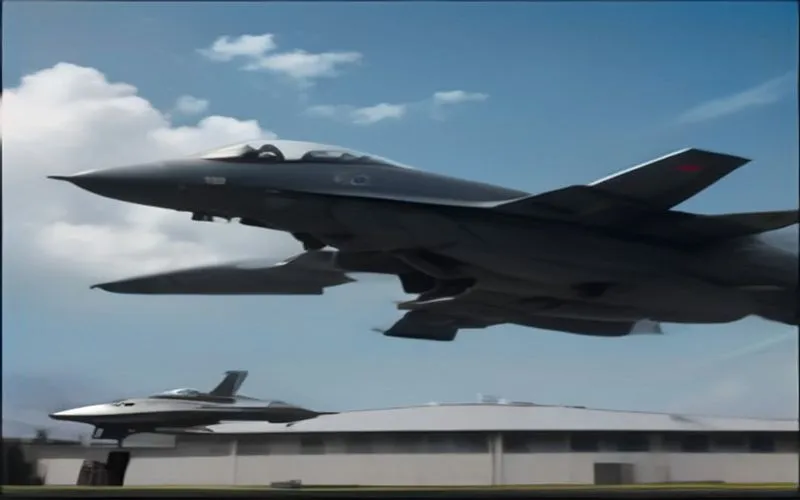
Swedish defense giant Saab has officially introduced a comprehensive roadmap for developing a new family of unmanned aircraft, designated as the A1, A2, and A3. Unveiled during the centennial air show of the Swedish Air Force at Malmen Air Base, these autonomous platforms serve as vital stepping stones toward establishing a fully operational loyal wingman fighter system. While the concept shares similarities with the Collaborative Combat Aircraft (CCA) programs pursued by the United States Air Force, Saab utilizes the terminology Autonomous Collaborative Platform (ACP) to describe these advanced force multipliers.
The A1, A2, and A3 Development Roadmap
The step-by-step technological progression features three distinct aircraft variants tailored for specific operational roles. The initial iteration, the A1, is engineered as a supersonic technology demonstrator powered by an artificial intelligence-driven General Electric F414 engine—the exact same power plant utilized by the advanced Gripen E/F fighter jets. Following closely, the A2 model will introduce an internal weapons bay to enhance stealth and payload delivery capabilities. Both the A1 and A2 demonstrators are expected to conduct their maiden flights within the next four years, with the very first flight anticipated in just 15 months.
Meanwhile, the larger A3 variant is envisioned as the ultimate commercial and military sales product that could formally enter active service within a decade, pending official government funding and procurement decisions. According to preliminary economic estimates provided by Saab, a single A3 platform would cost roughly one-third of a standard Gripen E on a lifecycle basis, and roughly half of the fighter's initial acquisition cost. This cost-efficiency makes collaborative combat aircraft an attractive option for modernizing air forces facing budgetary constraints.
Integration with the Gripen Ecosystem and Future Strategy
Swedish defense leadership has expressed strong support for Saab’s strategic approach to uncrewed integration. Swedish Defense Minister Pål Jonson noted that incorporating a loyal wingman component capable of executing deep strike and reconnaissance operations alongside the mother platform is a natural evolution of the Gripen combat aircraft ecosystem. Brig. Gen. Niclas Magnusson, Sweden’s deputy air chief, echoed this sentiment, emphasizing that the future of aerial warfare relies on mixed squadrons combining manned fighter jets and autonomous assets to overwhelm enemy air defenses.
The timeline for adopting the final operational platform aligns with Sweden's broader post-2040 defense strategy. In 2024, the Swedish Defense Materiel Administration awarded formal contracts to both Saab and GKN Aerospace for the 'Combat Aircraft Path Selection' program. This extensive initiative encompasses technical research, developmental studies, and demonstrator preparations designed to guide the Swedish Parliament (Riksdag) in making a definitive capability decision between 2028 and 2030.
Expanding Global Footprint and NATO Interoperability
Beyond domestic loyal wingman developments, Saab is experiencing a significant surge in international defense orders following Sweden’s historic accession to NATO. The company currently boasts a robust order backlog valued at 318 billion kronor ($33.6 billion). Key contracts include the production of A26 submarines for the Polish Navy, Gripen E fighter jets for Ukraine, and multiple GlobalEye Airborne Early Warning and Control (AEW&C) aircraft destined for international clients and NATO partners.
Company executives highlight that joining the alliance has significantly boosted market confidence in Swedish defense technologies. However, company representatives also stressed that the Gripen ecosystem has maintained complete NATO interoperability and compliance for over two decades. As European nations continue to accelerate joint defense investments, Saab's integration of autonomous systems and advanced sensor packages positions the Nordic industrial base as a cornerstone of future continental security and tactical deterrence.
Bu haber, Ajans Savunma editoryal standartları çerçevesinde Yapay Zeka destekli algoritmalar tarafından orijinal kaynaktaki teknik verilere sadık kalınarak yeniden derlenmiştir. Orijinal Kaynak: Breaking Defense



Yorumlar (0)
Henüz yorum yapılmamış. İlk yorumu siz yapın!
Bir Yorum Bırakın