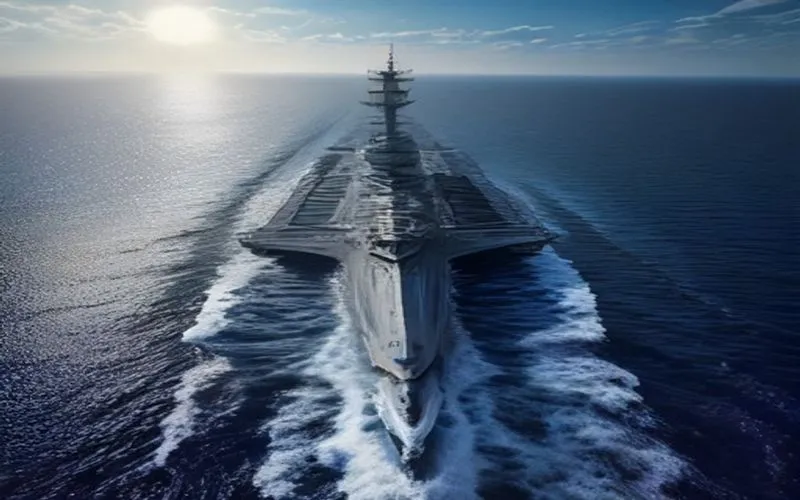
In a significant shift in naval procurement and engineering strategy, President Donald Trump has signed a National Security Presidential Memorandum mandating major changes for the U.S. Navy's future fleet architecture. A White House official confirmed that the newly enacted directives include a formal requirement to return to traditional steam-powered catapult systems on upcoming Ford-class aircraft carriers, moving away from newer electromagnetic technology.
Reverting to Steam Catapults on Ford-Class Carriers
The presidential directive specifically dictates that future Ford-class vessels—such as the future USS Doris Miller (CVN 81) currently under construction at HII's Newport News Shipbuilding—must be equipped with traditional steam-powered catapult systems rather than the Electromagnetic Aircraft Launch System (EMALS). The USS Gerald R. Ford (CVN 78), the lead ship of the class, currently utilizes EMALS to launch aircraft from its flight deck. However, President Trump has historically criticized the electromagnetic system, arguing that older, mechanical steam alternatives offer proven reliability.
Establishing a Fifth Public Shipyard for Submarine Maintenance
Beyond aircraft carrier launch systems, the memorandum tackles the pressing logistical and maintenance bottlenecks facing the U.S. submarine fleet. The directive officially initiates the creation of a new, fifth public shipyard. Current maintenance and modernization work for the Navy's nuclear-powered aircraft carriers and submarines is concentrated across four existing public shipyards located in Virginia, Maine, Washington, and Hawaii. Administration officials, including Office of Management and Budget Director Russel Vought, have previously emphasized the urgent need to expand public shipyard capacity to perform large-scale overhauls and drastically reduce maintenance delays.
Addressing Industrial Base and Repair Delays
The comprehensive memorandum also outlines the creation of a new component repair center designed explicitly to mitigate chronic submarine repair delays. While private shipyards play a critical role in supporting military vessel maintenance, defense officials have stressed that scaling up public infrastructure is vital to ensuring long-term fleet readiness and geopolitical deterrence. The initiative aims to streamline the industrial supply chain, enhance fleet availability, and ensure that the U.S. Navy maintains its strategic edge in an increasingly competitive global security environment.
Bu haber, Ajans Savunma editoryal standartları çerçevesinde Yapay Zeka destekli algoritmalar tarafından orijinal kaynaktaki teknik verilere sadık kalınarak yeniden derlenmiştir. Orijinal Kaynak: Breaking Defense



Yorumlar (0)
Henüz yorum yapılmamış. İlk yorumu siz yapın!
Bir Yorum Bırakın