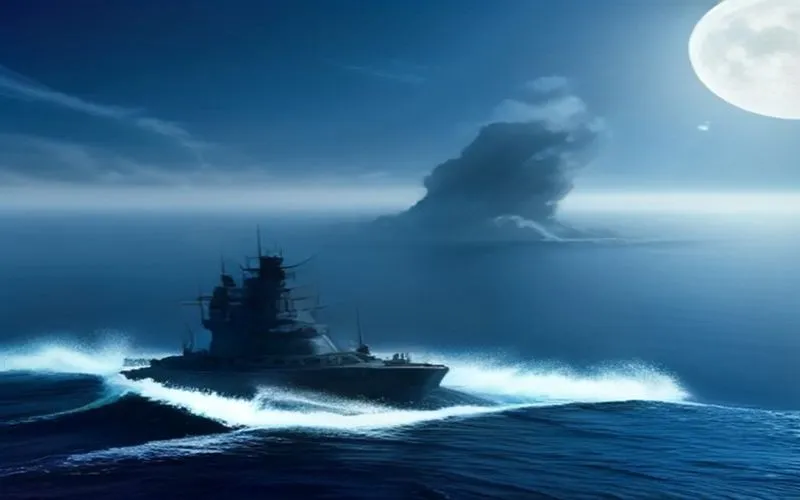
The U.S. Navy Pacific Fleet is currently pushing the boundaries of maritime warfare by testing novel operational concepts for Unmanned Underwater Vehicles (UUVs). As naval warfare increasingly pivots toward contested environments and anti-access/area-denial (A2/AD) scenarios, the U.S. military is exploring how autonomous underwater systems can extend operational reach without risking human lives. Recent initiatives focus heavily on integrating UUVs with major surface combatants, specifically aircraft carriers, and utilizing autonomous drones for critical submarine resupply missions.
Carrier-Basing UUVs for Enhanced Fleet Flexibility
Integrating unmanned systems directly into the carrier strike group workflow represents a major philosophical shift in modern naval operations. Traditionally, UUVs have been deployed from specialized research vessels, shore-based facilities, or dedicated mine-countermeasure ships. By testing carrier-basing capabilities, the U.S. Navy aims to leverage the mobility and organic aviation support of nuclear-powered aircraft carriers to launch and recover advanced underwater drones globally.
This integration brings several distinct advantages to fleet commanders:
- Rapid deployment of reconnaissance and surveillance assets directly into contested littorals.
- Reduced dependency on specialized pier-side infrastructure for launch and recovery operations.
- Enhanced maritime domain awareness across critical chokepoints and strategic straits.
- Scalable mission packages that can be swapped directly aboard the carrier.
Revolutionizing Submarine Replenishment and Undersea Logistics
Beyond traditional intelligence, surveillance, and reconnaissance (ISR) missions, the Pacific Fleet is evaluating UUVs for clandestine submarine replenishment. Operating stealthily in hostile waters severely limits a submarine's ability to surface or meet traditional tenders for critical cargo, spare parts, or medical supplies. Autonomous underwater resupply vehicles offer a game-changing solution to this logistical bottleneck.
These heavy-payload UUVs are designed to dock autonomously with submerged submarines or deliver sealed cargo pods to pre-determined seabed depots. By keeping submarines submerged and hidden from adversary sensors, the U.S. Navy can maintain continuous patrol persistence and tactical surprise in high-threat theaters like the Indo-Pacific.
Strategic Implications for Indo-Pacific Deterrence
The ongoing trials by the U.S. Navy Pacific Fleet underscore a broader strategic imperative: mastering autonomous logistics and distributed maritime operations. In a potential large-scale conflict, supply lines will be heavily targeted by long-range anti-ship missiles and advanced sensor networks. Implementing unmanned underwater resupply and distributed UUV basing directly addresses these vulnerabilities.
As these technologies mature, defense analysts expect the U.S. Navy to codify these operational concepts into standard doctrine, setting a new benchmark for autonomous warfare and naval logistics in the 21st century.
Bu haber, Ajans Savunma editoryal standartları çerçevesinde Yapay Zeka destekli algoritmalar tarafından orijinal kaynaktaki teknik verilere sadık kalınarak yeniden derlenmiştir. Orijinal Kaynak: Naval News (Global)
Yorumlar (0)
Henüz yorum yapılmamış. İlk yorumu siz yapın!
Bir Yorum Bırakın