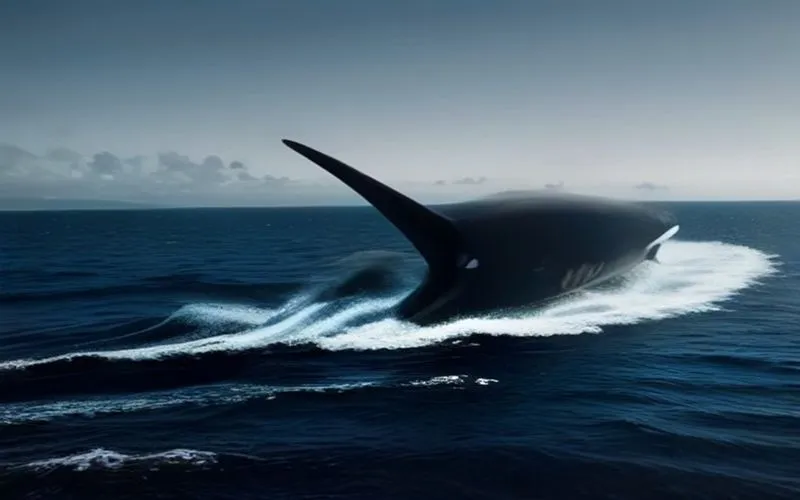
In a major milestone for uncrewed undersea warfare, the U.S. Navy has successfully completed its first-ever 1,000-nautical-mile long-range transit utilizing the Orca Extra Large Uncrewed Undersea Vehicle (XLUUV). Conducted in July, this historic mission demonstrates the operational viability and extended endurance of autonomous maritime platforms in vast oceanic environments, reshaping future naval warfare doctrines.
Milestone Achievement in Uncrewed Undersea Warfare
The successful voyage was executed in close collaboration between the U.S. Navy and industry partners Boeing and Huntington Ingalls Industries (HII). As the prime contractors, Boeing and HII designed the Orca XLUUV to operate completely independently from a host ship, providing unprecedented strategic reach. The Program Executive Office for Unmanned Small Combatants (PEO USC) oversaw the deployment, which serves as a critical proof-of-concept for the future of autonomous naval operations in contested waters like the Pacific.
Technical Capabilities of the Boeing-Built Orca XLUUV
The Orca XLUUV is a modular, autonomous submarine designed to perform a wide array of critical missions without risking human lives. Key technical features and operational roles include:
- Extended Range: Capable of transiting over 1,000 nautical miles autonomously, allowing deep-penetration surveillance and patrol missions.
- Modular Payload Bay: Designed to host diverse mission packages, including mine countermeasures, anti-submarine warfare, anti-surface warfare, and electronic warfare.
- Autonomous Navigation: Utilizes advanced guidance and propulsion systems to operate independently for months in remote operational theaters.
Strategic Implications for Indo-Pacific Operations
The successful 1,000-mile Pacific transit directly supports the U.S. Navy's strategy to integrate unmanned systems into distributed maritime operations. Given the vast geographic expanse of the Indo-Pacific theater, the ability to deploy long-range autonomous submarines provides commanders with persistent surveillance and strike capabilities. This technological advancement acts as a crucial force multiplier, ensuring sea control and deterrence against peer adversaries in contested maritime chokepoints.
Bu haber, Ajans Savunma editoryal standartları çerçevesinde Yapay Zeka destekli algoritmalar tarafından orijinal kaynaktaki teknik verilere sadık kalınarak yeniden derlenmiştir. Orijinal Kaynak: Naval News (Global)



Yorumlar (0)
Henüz yorum yapılmamış. İlk yorumu siz yapın!
Bir Yorum Bırakın