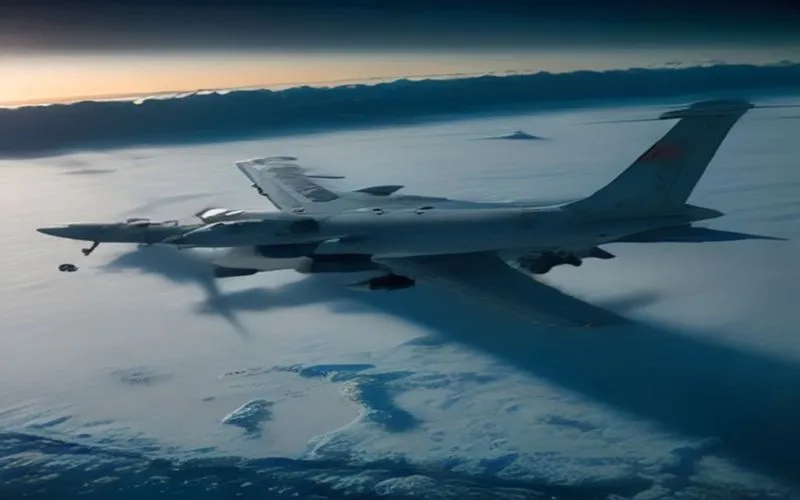
A U.S. Air Force resupply mission heading toward Antarctica was abruptly halted and forced to return to New Zealand following a warning regarding potentially hazardous space activity. The incident highlights the complex coordination required in international airspace and the impact of external military activities on routine logistical operations.
The Incident and Flight Path Alteration
Flight-tracking data confirmed that a U.S. Air Force C-17A Globemaster III transport aircraft departed from Christchurch International Airport on a routine logistical run. Operating under the call sign ICE28, the aircraft was part of the annual Winter Fly-in period, known as WinFly, which delivers crucial cargo and personnel to research stations in Antarctica.
However, roughly two hours into the flight, the aircraft reversed course and safely landed back in Christchurch. The abrupt turnaround was initiated after New Zealand’s Civil Aviation Authority (CAA) issued a Notice to Airmen (NOTAM) warning of potential hazards in the region's airspace.
Russian Missile Launch Notification and NOTAM Issuance
According to the CAA spokesperson, the agency received formal notification from the Russian Air Traffic Management Corporation regarding a planned missile launch. The scheduled test created a potentially hazardous situation within New Zealand's Oceanic Flight Information Region (FIR), which spans vast expanses of international waters across the South Pacific and Southern oceans.
In response to the advisory, the CAA established a temporary danger area and disseminated the NOTAM to alert all regional aircraft operators. While a NOTAM serves as a warning rather than a strict flight ban, leaving operational decisions to flight crews, the U.S. military command chose to prioritize safety and abort the mission.
Strategic Importance of Operation Deep Freeze
The interrupted flight was tied to ongoing operations supporting the U.S. Antarctic Program and international scientific research. Christchurch serves as the primary gateway for both the United States Air Force and the New Zealand Defense Force to conduct logistical support for McMurdo Station and Scott Base.
The Boeing C-17A Globemaster III remains the backbone of these long-range transport missions, providing heavy tactical airlift capabilities capable of delivering hundreds of passengers and massive quantities of cargo to remote environments. Despite the temporary setback, military and civil aviation authorities continue to monitor aerospace activities to ensure safe passage in increasingly crowded international flight corridors.
Bu haber, Ajans Savunma editoryal standartları çerçevesinde Yapay Zeka destekli algoritmalar tarafından orijinal kaynaktaki teknik verilere sadık kalınarak yeniden derlenmiştir. Orijinal Kaynak: Defense News Global



Yorumlar (0)
Henüz yorum yapılmamış. İlk yorumu siz yapın!
Bir Yorum Bırakın