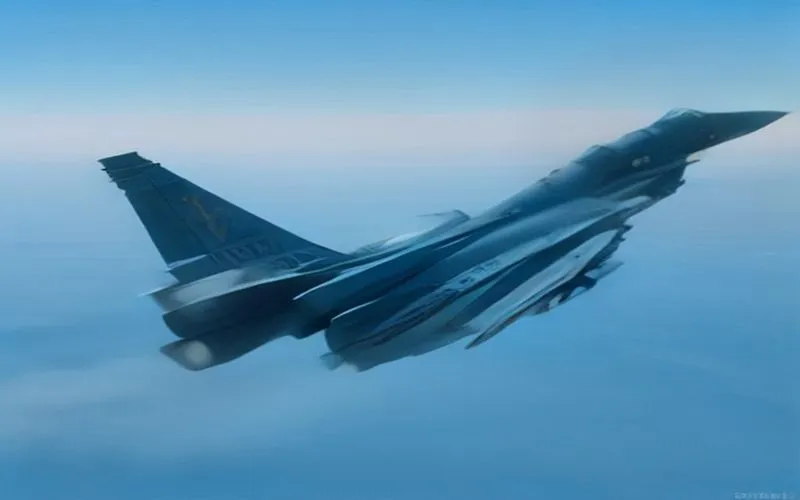
The United States Department of Defense has officially announced a landmark indefinite-delivery, indefinite-quantity (ID/IQ) contract worth up to $131.2 billion awarded to aerospace giant Boeing for the iconic F-15 Eagle fighter jet family. Designated as the 'Eagle Crest' contract vehicle, this colossal agreement is designed to streamline and accelerate future agreements, aircraft production, major upgrades, and global sustainment operations for both the U.S. Air Force and international Foreign Military Sales (FMS) partners. Running through August 2037, the massive financial ceiling highlights the enduring strategic value of the 4.5-generation platform amid a rapidly evolving global combat aviation landscape.
Strategic Significance and Scope of the Eagle Crest Agreement
Defense analysts emphasize that the Eagle Crest contract ranks among the largest procurement vehicles recently initiated by the Pentagon. While ID/IQ contracts provide immense flexibility without committing the government to spend the full ceiling amount immediately, the sheer scale of the $131.2 billion valuation dwarfs similar historical agreements, such as Lockheed Martin's $62 billion F-16 FMS contract awarded in 2020. The vehicle covers a comprehensive suite of capabilities, ensuring that current and future operators can rapidly execute modifications and procurements without administrative bottlenecks. The Air Force noted that consolidating these efforts significantly reduces bureaucratic burdens and accelerates capability delivery to the warfighter.
Global Operators and Foreign Military Sales Integration
The expansive agreement encompasses nearly all major international operators of the F-15 platform alongside the United States military. Key foreign partners included in the framework are Japan, Israel, Saudi Arabia, South Korea, and Singapore, many of which are currently acquiring new aircraft variants or upgrading existing fleets. Furthermore, the contract establishes a procurement pathway for potential FMS endeavors with nations like Indonesia and Poland. The inclusion of international buyers underscores the multi-national reliance on Boeing's heavy fighter, especially as nations seek advanced combat capabilities to deter regional adversaries and secure airspace dominance.
Production Challenges and Future Combat Aviation Integration
Despite the immense financial backing, the expanded F-15EX program faces notable hurdles. The Air Force's strategic plan to more than double its procurement of the advanced F-15EX variant to 267 aircraft introduces distinct cost and schedule uncertainties. Recent Pentagon acquisition reports indicate that baseline schedules for achieving full operational capability have experienced delays, driven in part by manufacturing setbacks, supply chain constraints, and the necessity for major technical refreshes. These overhauls involve replacing obsolete systems, including advanced radars, next-generation engines, and sophisticated electronic warfare suites. As the U.S. military pivots toward future systems such as Collaborative Combat Aircraft (CCAs) and next-generation tactical fighters, the sustained investment in the F-15 proves that heavy multirole fighters will remain a critical pillar of aerospace power for decades to come.
Bu haber, Ajans Savunma editoryal standartları çerçevesinde Yapay Zeka destekli algoritmalar tarafından orijinal kaynaktaki teknik verilere sadık kalınarak yeniden derlenmiştir. Orijinal Kaynak: Breaking Defense



Yorumlar (0)
Henüz yorum yapılmamış. İlk yorumu siz yapın!
Bir Yorum Bırakın