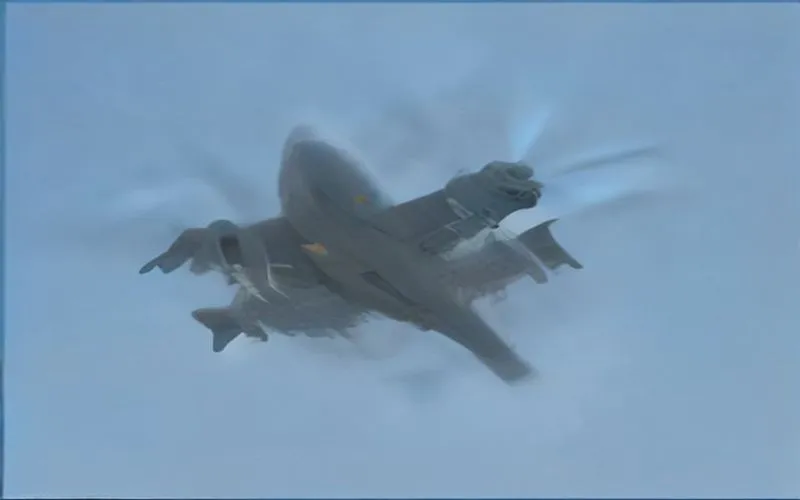
The United States government has taken a significant step toward bolstering regional deterrence and allied capabilities by approving a potential Foreign Military Sale (FMS) of four KC-46A Pegasus refueling aircraft to Qatar. Valued at an estimated $4.5 billion, the prospective military package underscores Washington's enduring commitment to the security architecture of the Gulf region, particularly as geopolitical friction and security challenges persist across the Middle East.
Strategic Implications and Interoperability
The proposed acquisition is designed to substantially increase Qatar's capacity to counter current and emerging aerial threats. By integrating the advanced aerial refueling platform into its military inventory, the Qatar Emiri Air Force will significantly enhance its operational range, endurance, and overall defense readiness. Furthermore, the inclusion of the KC-46A ensures a high degree of operational interoperability with U.S. and allied forces, a crucial factor for coalition operations, joint exercises, and synchronized regional security frameworks. The U.S. State Department’s Bureau of Political-Military Affairs emphasized that the deal reinforces Qatar’s vital strategic role in maintaining stability throughout the volatile region.
Comprehensive Package and Technical Systems
Beyond the four Boeing-manufactured airframes, the comprehensive $4.5 billion defense package encompasses a robust suite of avionics, defensive countermeasures, and propulsion systems. The agreement outlines the provision of eight Pratt & Whitney PW4062 turbofan engines—split evenly between installed powerplants and dedicated spare parts to ensure high fleet availability. To ensure platform survivability in contested environments, the arrangement features ten AN/ALR-69A radar warning receivers, fifteen Guardian Laser Transmitter Assemblies (GLTA), and eight Large Aircraft Infrared Countermeasure (LAIRCM) system processor replacements.
The notification to Congress also accounts for critical support systems, including advanced missile warning sensors, Identification Friend or Foe (IFF) transponders, precision navigation systems, and comprehensive training aids. Major defense contractors slated to execute the contract include Boeing, Pratt & Whitney, RTX, and Northrop Grumman. Notably, the U.S. government indicated that the implementation of this potential sale will not necessitate the permanent deployment of additional U.S. personnel or contractor representatives within Qatari territory.
Geopolitical Context in the Gulf
This major defense development unfolds against the backdrop of heightened regional volatility driven by persistent conflicts involving the United States, Israel, and Iran. Over recent months, Gulf states have frequently confronted aerial threats from regional proxies, including incoming ballistic missiles and one-way attack drones. Despite intermittent diplomatic efforts and ceasefires, security concerns remain acute among Gulf Cooperation Council (GCC) members.
Consequently, the United States has accelerated several high-value foreign military sales to key regional partners to fortify their integrated air and missile defense networks. Recent approvals include precision-guided munitions packages for Saudi Arabia and advanced counter-unmanned aerial systems (C-UAS) for Kuwait, reflecting a broader American strategy to ensure partner nations possess the necessary deterrent capabilities to safeguard critical infrastructure and sovereign airspace.
Bu haber, Ajans Savunma editoryal standartları çerçevesinde Yapay Zeka destekli algoritmalar tarafından orijinal kaynaktaki teknik verilere sadık kalınarak yeniden derlenmiştir. Orijinal Kaynak: Breaking Defense



Yorumlar (0)
Henüz yorum yapılmamış. İlk yorumu siz yapın!
Bir Yorum Bırakın