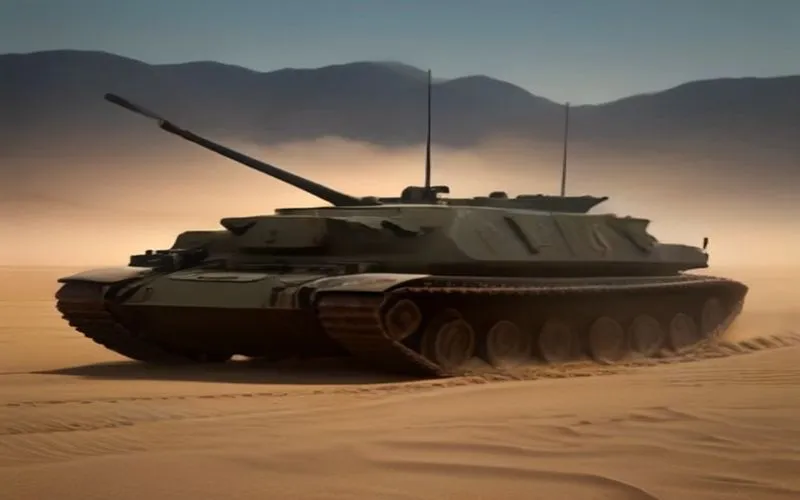
The United States Army is moving rapidly into a new era of armored warfare, with the 1st Armored Brigade Combat Team—popularly known as the Iron Horse brigade—preparing to receive and evaluate groundbreaking next-generation combat vehicle prototypes. As modern battlefields evolve with increasing demands for lethality, mobility, and survivability, the military is transitioning away from legacy platforms like the M1A2 Abrams and the Bradley Infantry Fighting Vehicle. The upcoming trials of the M1E3 Abrams and the XM30 Mechanized Infantry Fighting Vehicle represent a monumental leap forward in ground combat technology, promising to redefine how armored brigades operate in multi-domain conflict scenarios.
Revolutionizing Main Battle Tanks with the M1E3 Abrams
The M1E3 Abrams is designed to directly address the weight and logistical challenges of its predecessor, the aging M1A2. Significantly lighter, the next-generation main battle tank incorporates a hybrid-electric engine that slashes fuel requirements by half, greatly reducing the logistical footprint of armored units on the move. Furthermore, the integration of an unmanned turret reduces the required crew from four soldiers to three, maximizing operational efficiency and internal space.
Equipped with an open systems architecture, the M1E3 allows crews to continuously update software and "fight on a cloud," connecting disparate battlefield systems for unprecedented situational awareness. Coupled with a 360-degree situational awareness system, the tank empowers soldiers to detect, track, and destroy enemy targets at extreme distances with ruthless precision and lethal speed.
The XM30 Competition: Wolf Versus Lynx
Replacing the stalwart Bradley Fighting Vehicle, the XM30 program has narrowed down to a fierce competition between General Dynamics Land Systems (GDLS) offering its Wolf variant, and American Rheinmetall fielding its Lynx variant. Both vehicles adhere to strict Army requirements, featuring powerful 50 mm cannons, hybrid-electric powertrains, open architectures, and unmanned turrets that drastically elevate combined arms capabilities.
- Enhanced Firepower: Upgraded from the legacy 25 mm cannon to a lethal 50 mm main gun with high-explosive airburst ammunition.
- Counter-UAS Integration: The Wolf will integrate AeroVironment's Switchblade 300 loitering munition, while the Lynx utilizes Raytheon's Coyote drone and Javelin missile systems.
- Advanced Computing: Exportable power and enhanced processing power allow for seamless software integration and modular upgrades.
Strategic Timeline and Future Outlook
Brig. Gen. Troy Denomy confirmed that prototype deliveries are slated to arrive at the Iron Horse brigade soon, with rigorous testing culminating in a National Training Center (NTC) rotation. The Army aims to keep its options open between GDLS and American Rheinmetall as long as possible to evaluate performance under realistic combat stress before making a final down-select decision. Ultimately, the successful fielding of the M1E3 and XM30 will ensure that US armored brigades maintain technological overmatch against near-peer adversaries for decades to come.
Bu haber, Ajans Savunma editoryal standartları çerçevesinde Yapay Zeka destekli algoritmalar tarafından orijinal kaynaktaki teknik verilere sadık kalınarak yeniden derlenmiştir. Orijinal Kaynak: Breaking Defense



Yorumlar (0)
Henüz yorum yapılmamış. İlk yorumu siz yapın!
Bir Yorum Bırakın