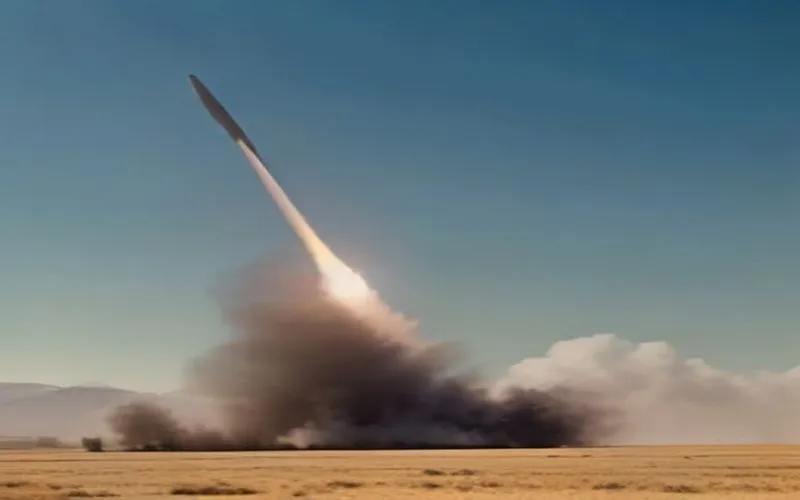
In a decisive move to address growing concerns over dwindling military stockpiles, the U.S. Army has issued an aggressive new request to scale up industrial manufacturing. According to a recent Sources Sought notice, the service is calling for the production of an astounding 133,014 Guided Multiple Launch Rocket System (GMLRS) rockets by the year 2034. This strategic initiative highlights the intense global demand for advanced precision-guided munitions following heavy consumption in modern conflict zones such as Ukraine.
Ambitious Production Timeline and Industrial Targets
The newly outlined timeline requires defense contractors to achieve a sustained manufacturing rate of 19,002 GMLRS rockets annually between 2028 and 2034. Actual deliveries under this new procurement framework are scheduled to commence in February 2030. The scope of the multi-faceted contract encompasses full-scale production, specialized tooling, engineering change proposals, and comprehensive support services. This requirement applies to multiple variants of the munition, including unitary warheads, alternative warheads (AW), and the highly sought-after extended range (ER) rockets.
Currently, primary manufacturer Lockheed Martin has been working to elevate its production capacity to 14,000 rockets per year. However, the Army's newly stated quota demands an additional 36 percent surge on top of those existing targets. Defense contractors have been given until September 1 to submit comprehensive white papers detailing the most cost-effective and efficient methods to meet these unprecedented manufacturing goals.
Combat Heritage and Platform Integration
Originally conceptualized during the Cold War as a powerful conventional deterrent against massive armored formations in Europe, multiple launch rocket systems have experienced a dramatic renaissance. The GMLRS family of munitions is predominantly deployed via two major U.S. Army platforms: the tracked M270 Multiple Launch Rocket System and the highly mobile, truck-mounted M142 High Mobility Artillery Rocket System (HIMARS). While the baseline GMLRS variant boasts an operational range of approximately 70 kilometers, the advanced extended-range variants can successfully engage targets up to 150 kilometers away.
The combat effectiveness of these precision systems became legendary during the war in Ukraine, where Ukrainian forces utilized HIMARS and M270 batteries to devastate Russian command posts, logistics hubs, and troop concentrations. Despite their overwhelming tactical success, heavy electronic warfare environments—specifically advanced Russian GPS jamming—have occasionally impacted guidance accuracy, prompting continuous technological adaptation.
Addressing Stockpile Depletion and Supply Chain Hurdles
Decades of continuous foreign military assistance, combined with ongoing strategic commitments in the Middle East, have heavily depleted U.S. military stockpiles of precision-guided munitions. Efforts to restock these vital arsenals have occasionally faced friction, including industrial bottlenecks and critical shortages of essential components such as solid rocket motors. By aggressively engaging defense industrial partners well in advance, the U.S. military aims to fortify its supply chains, ensure long-term strategic readiness, and maintain overwhelming artillery dominance for future multi-domain conflicts.
Bu haber, Ajans Savunma editoryal standartları çerçevesinde Yapay Zeka destekli algoritmalar tarafından orijinal kaynaktaki teknik verilere sadık kalınarak yeniden derlenmiştir. Orijinal Kaynak: Defense News (Global)



Yorumlar (0)
Henüz yorum yapılmamış. İlk yorumu siz yapın!
Bir Yorum Bırakın