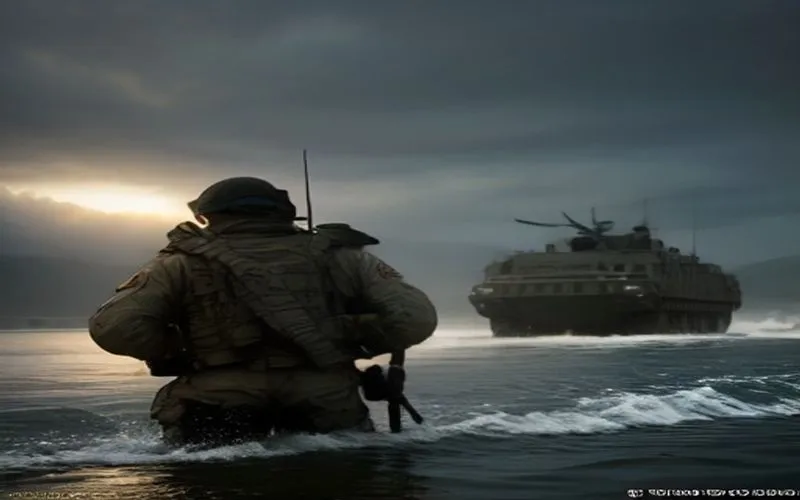
The United States military has officially canceled a major upcoming joint amphibious landing drill with South Korea, citing global force constraints stemming from commitments related to the ongoing war in Iran. The division-level exercise, widely known as the Ssangyong exercise, was originally scheduled to take place next month, allowing both nations to practice complex amphibious assault maneuvers and enhance bilateral interoperability. However, the U.S. Marine Corps formally notified its South Korean counterpart that asset availability would be severely restricted.
Global Force Management and Strategic Strain
The cancellation underscores the complex balancing act required by the Pentagon as concurrent geopolitical crises strain U.S. military resources across multiple theaters. With strategic assets heavily engaged in the Middle East due to the conflict with Iran, the Department of Defense faces difficult choices regarding force posture and deployment schedules in the Indo-Pacific region. Military analysts note that while the U.S. remains deeply committed to its mutual defense treaty with South Korea, global operational demands inevitably create friction in routine training schedules.
Diplomatic Engagements and Alliance Coordination
Following the announcement, high-level diplomatic channels mobilized to address the implications of the canceled drills on regional deterrence. U.S. State Department officials confirmed that Secretary of State Marco Rubio held discussions with South Korean Foreign Minister Cho Hyun to review the broader scope of the bilateral alliance. Both sides emphasized the necessity of maintaining close coordination on core defense and security matters, even as logistical hurdles impact joint training calendars. Defense officials from both nations continue to consult on alternative ways to maintain combat readiness.
Broader Adjustments to Joint Military Exercises
This development follows earlier strategic shifts in the region, including the scaling back of other prominent joint exercises, such as the Ulchi Freedom Shield drills, prompted by administrative directives and cost considerations. Despite these scaled-back training opportunities and shifting U.S. priorities, regional adversaries have continued aggressive posturing, evidenced by recent ballistic missile launches from North Korea. As Washington recalibrates its global footprint to address Middle Eastern commitments, the alliance between the U.S. and South Korea faces new tests in preserving regional stability and deterrence without compromising operational readiness.
Bu haber, Ajans Savunma editoryal standartları çerçevesinde Yapay Zeka destekli algoritmalar tarafından orijinal kaynaktaki teknik verilere sadık kalınarak yeniden derlenmiştir. Orijinal Kaynak: Defense News Global



Yorumlar (0)
Henüz yorum yapılmamış. İlk yorumu siz yapın!
Bir Yorum Bırakın