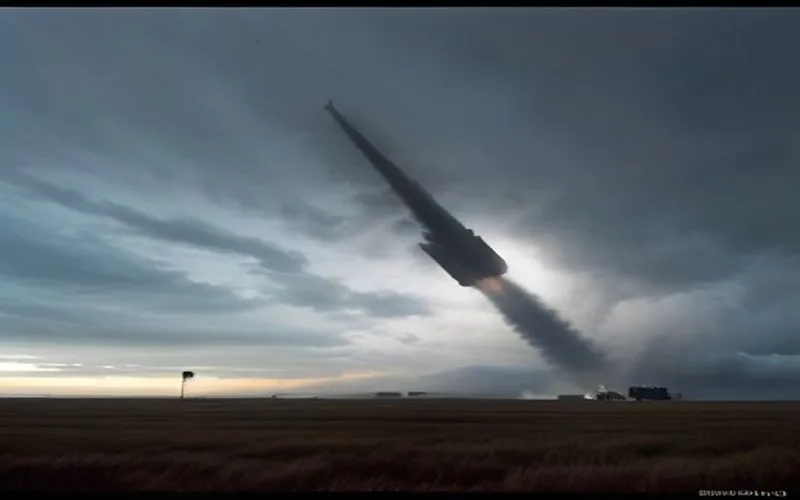
The geopolitical landscape of modern air defense has encountered a complex bottleneck as American defense contractors and federal officials hesitate on finalizing a landmark agreement. Major defense primes Lockheed Martin and Raytheon are putting the brakes on a proposed joint-production deal that would grant Kyiv a license to manufacture advanced Patriot missile interceptors domestically. While the initiative initially gained political momentum following high-level discussions, defense executives and Washington policymakers are currently navigating a web of regulatory red tape, inventory constraints, and underlying industrial apprehensions.
The Geopolitical Push and Political Backpedaling
The saga began when high-level political commitments indicated a major shift in military assistance frameworks. However, the initial enthusiasm has been met with significant bureaucratic hesitation. American officials have begun to backpedal on immediate licensing permissions, with administration representatives emphasizing the need for rigorous oversight regarding sensitive military technology transfers. Despite these political hurdles, Ukrainian leadership has maintained that foundational agreements have been reached, even as execution timelines remain highly uncertain.
Industrial Concerns and the Fear of Low-Cost Competition
Behind the official concerns regarding intellectual property theft and technology transfer lie deeper economic and industrial anxieties. Defense industry insiders suggest that major contractors are wary of Ukraine's rapidly maturing defense manufacturing sector. Having been honed by years of intense conflict, Ukraine's domestic arms industry has proven capable of innovating rapidly and scaling production at a fraction of Western costs. Contractors fear that enabling Kyiv to produce or improve upon the Patriot system could give rise to a formidable new competitor capable of undercutting traditional defense monopolies on the global market.
Inventory Depletion and Strategic Air Defense Alternatives
The debate surrounding the Patriot production license is further complicated by severe strains on global missile inventories. Ongoing geopolitical conflicts across multiple theaters have significantly depleted pre-war stockpiles of critical interceptors, forcing the United States and its allies to reevaluate their strategic readiness. In response to these supply constraints, international partners are increasingly turning toward alternative solutions. Collaborations such as the newly formed European-Ukrainian defense coalitions aim to field cheaper, faster-to-produce anti-ballistic systems, highlighting a broader shift toward cost-effective mass production in modern air defense strategy.
Bu haber, Ajans Savunma editoryal standartları çerçevesinde Yapay Zeka destekli algoritmalar tarafından orijinal kaynaktaki teknik verilere sadık kalınarak yeniden derlenmiştir. Orijinal Kaynak: Defense News Global



Yorumlar (0)
Henüz yorum yapılmamış. İlk yorumu siz yapın!
Bir Yorum Bırakın