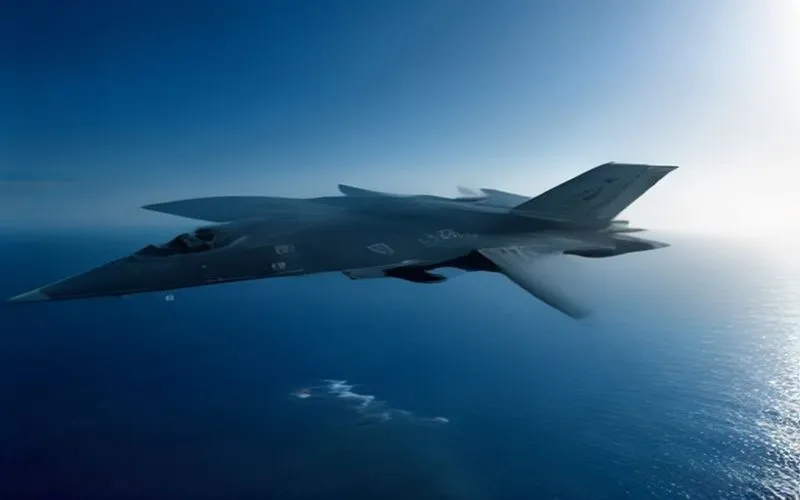
During recent multinational military exercises in the Pacific, the US military showcased its rapidly evolving anti-ship warfare capabilities. Events like Exercise Valiant Shield and the Rim of the Pacific (RIMPAC) provided critical testing grounds for long-range precision strikes and unmanned surface vessel operations, designed to counter potential maritime threats across vast ocean distances.
Stealth Bombers Unleash LRASM in the Pacific
A major highlight of the Valiant Shield exercises was the deployment of the AGM-158C Long Range Anti-Ship Missile (LRASM) from a US Air Force B-2 Spirit stealth bomber. This marked a significant milestone as the first publicly acknowledged integration and launch of the weapon from a B-2 platform. Because the B-2 carries the LRASM internally, it preserves its low radar cross-section, allowing the aircraft to execute stealthy, long-range anti-ship strikes in heavily contested airspace.
Multi-Domain Strike Coordination at RIMPAC
The RIMPAC exercise, spanning Hawaii with forces from 30 nations, further tested joint kill chains by neutralizing decommissioned naval vessels like the cruiser Mobile Bay and the amphibious assault ship Peleliu. The strikes utilized a diverse array of ordnance, ranging from submarine-launched torpedoes and Naval Strike Missiles to Spike Non-Line of Sight missiles. Military leaders emphasized that these complex sinking exercises (SINKEX) are vital for ensuring seamless coordination among allied forces in detecting, tracking, and targeting adversarial fleets.
Integration of Autonomous Unmanned Surface Vessels
In addition to traditional aircraft and submarines, the US Navy integrated autonomous technology into the live-fire demonstrations. Unmanned Surface Vessels (USVs), specifically the Global Autonomous Reconnaissance Craft (GARC) built by BlackSea Technologies, were utilized during RIMPAC. One such autonomous craft was deployed to survey a target vessel before physically impacting the hulk, marking a historic milestone for USV Division 32 as they expand the operational utility of autonomous systems in modern naval warfare.
Bu haber, Ajans Savunma editoryal standartları çerçevesinde Yapay Zeka destekli algoritmalar tarafından orijinal kaynaktaki teknik verilere sadık kalınarak yeniden derlenmiştir. Orijinal Kaynak: Breaking Defense


Yorumlar (0)
Henüz yorum yapılmamış. İlk yorumu siz yapın!
Bir Yorum Bırakın