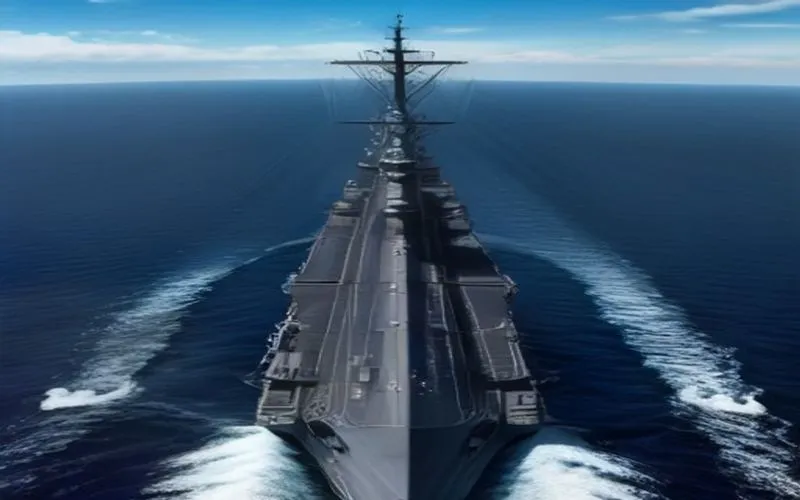
The operational tempo of the United States Navy's nuclear-powered flattop fleet continues to face severe friction and strategic strain. According to recent maritime tracking and defense reports, the USS George Washington Carrier Strike Group was detected transiting the Malacca Strait and entering the Indian Ocean. This repositioning is intended to provide critical relief to the sailors and Marines aboard the USS Abraham Lincoln, a vessel that has maintained grueling, round-the-clock operations in the Middle East without a single liberty port call since deploying in November of the previous year. While this rotation brings much-needed respite to the Lincoln crew, it simultaneously creates a temporary yet precarious carrier gap in the vital Indo-Pacific theater.
Indo-Pacific Deterrence Challenges and Fleet Strain
The movement of the George Washington leaves the U.S. Pacific Command (PACOM), commanded by Admiral Samuel Paparo, completely devoid of an in-theater aircraft carrier to deter potential aggression from the People’s Republic of China (PRC) and the Democratic People’s Republic of Korea (DPRK). Although carrier coverage gaps in the Pacific were historically rare, occurrences have become more frequent due to persistent global commitments and maintenance backlogs. Admiral Paparo has previously noted that high operational tempos and active regional conflicts impose severe costs on readiness, directly eating into munitions stockpiles and overall force availability. Should an unexpected contingency arise in the Western Pacific, the closest available carrier strike group would need to steam from a distant operational area, introducing dangerous response-time delays.
Middle East Operations and the Central Command AOR
In the U.S. Central Command (CENTCOM) area of responsibility, both the USS Abraham Lincoln and the USS George H.W. Bush have been actively enforcing maritime security measures and blockade operations, frequently referred to as the 'steel wall.' Over the course of its extended deployment, the Lincoln has launched more than 10,000 sorties and dropped substantial amounts of ordnance, necessitating critical underway replenishments alongside support vessels like the USNS Arctic and USNS Alan Shepard. Meanwhile, diplomatic efforts and cease-fire negotiations in the region face mounting obstacles, as deadlines pass without extensions, signaling prolonged commitments for the deployed strike groups.
Carrier Force Generation and Future Deliveries
Addressing these chronic fleet shortages depends heavily on the successful workups and construction milestones of upcoming vessels. On the U.S. West Coast, the USS Carl Vinson has recently gotten underway from San Diego to conduct pre-deployment training, while sister ships like the USS Theodore Roosevelt prepare to step up next. On the East Coast, the Navy's second Gerald R. Ford-class aircraft carrier, the future Pre-Commissioning Unit (PCU) John F. Kennedy, recently returned to Newport News, Virginia, after successfully completing acceptance sea trials. Achieving roughly 98 percent completion, the advanced flattop is slated for official delivery in the spring of 2027, promising to inject modern technological capabilities and much-needed capacity into the broader carrier fleet.
Bu haber, Ajans Savunma editoryal standartları çerçevesinde Yapay Zeka destekli algoritmalar tarafından orijinal kaynaktaki teknik verilere sadık kalınarak yeniden derlenmiştir. Orijinal Kaynak: The War Zone (Global)

Yorumlar (0)
Henüz yorum yapılmamış. İlk yorumu siz yapın!
Bir Yorum Bırakın