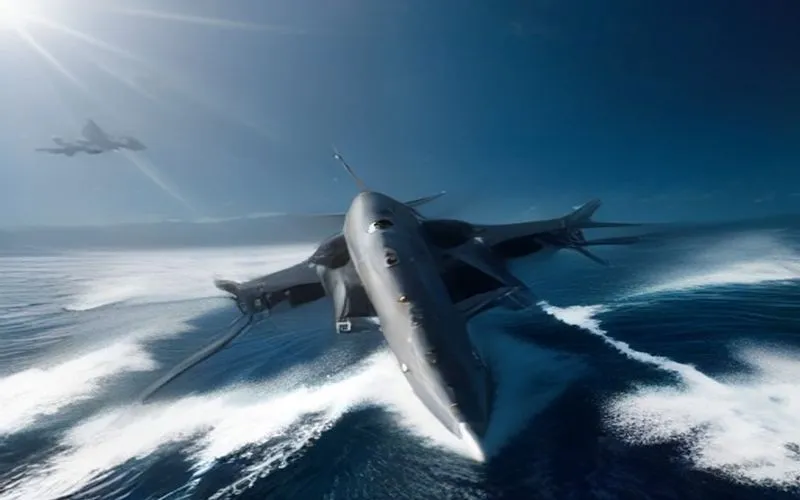
The U.S. Navy is actively reshaping its underwater warfare capabilities by pursuing innovative approaches to anti-submarine warfare (ASW). At the center of this initiative is the Silent Anvil Air-Launched Torpedo (SAA-LT) program, a cutting-edge effort designed to revolutionize how aircraft engage subsurface targets. As geopolitical tensions rise and adversaries expand their submarine fleets, the Navy needs flexible, long-range solutions that keep aircraft safe from modern air defenses while effectively neutralizing underwater threats.
Exploring Advanced Glide Weapon Concepts
According to recent requests for information (RFI) issued by the Navy, the service is evaluating two primary pathways for the Silent Anvil project. The first option involves engineering an entirely new torpedo engineered to glide through the air after being dropped from an aircraft or drone before transitioning into the water to acoustically home in on its target. The second option focuses on designing a specialized glide kit that can be affixed to existing torpedoes.
This methodology mirrors proven defense successes, such as the Navy's High Altitude Anti-Submarine Warfare Weapon Capability system, which integrated glide kits with standard Mark 54 torpedoes deployed from P-8 Poseidon patrol aircraft. Furthermore, it echoes the overarching concept of the Air Force's Joint Attack Direct Munition (JDAM), transforming standard ordnance into precision-guided standoff weapons.
Strict Form Factor and Operational Parameters
To ensure maximum versatility across a wide fleet of platforms, the Navy has established rigorous design parameters for the SAA-LT system. Key specifications include:
- Weight: Maximum of 268 pounds to comply with stringent loading limits.
- Length: No more than 70 inches.
- Diameter: Up to 7.5 inches, ensuring compatibility with the standard BRU-61/A bomb rack.
- Integration: Must fit internally or externally on multiple manned and unmanned aircraft platforms, matching the compact form factor of the GBU-39 Small Diameter Bomb.
The operational envelope requested by the military is remarkably expansive. The RFI highlights launch speed and altitude bands spanning Mach 0.25, 0.50, and 0.85, operating at altitudes ranging from a mere 10 feet up to a staggering 60,000 feet. This upper ceiling closely aligns with the operational capabilities of high-altitude uncrewed aerial systems like the MQ-4C Triton.
Strategic Imperatives and Future Timeline
The push for advanced standoff ASW weapons comes as major strategic competitors, notably China, significantly expand the size and sophistication of their naval fleets, including the integration of large, long-range autonomous underwater vehicles. By providing a glide weapon, the U.S. Navy aims to maximize aerial flight endurance while minimizing aquatic immersion time, restricting water residence strictly to mission execution.
The procurement timeline for Silent Anvil is aggressive. The Navy's roadmap outlines the delivery of an initial prototype within 18 months following an agreement award, which will subsequently pave the way for 180 all-up-round prototypes within three years after a successful demonstration phase. This initiative, alongside other endeavors like the Long Range Antisubmarine Warfare weapon, signifies a comprehensive modernization of American naval striking power.
Bu haber, Ajans Savunma editoryal standartları çerçevesinde Yapay Zeka destekli algoritmalar tarafından orijinal kaynaktaki teknik verilere sadık kalınarak yeniden derlenmiştir. Orijinal Kaynak: Defense News (Global)


Yorumlar (0)
Henüz yorum yapılmamış. İlk yorumu siz yapın!
Bir Yorum Bırakın