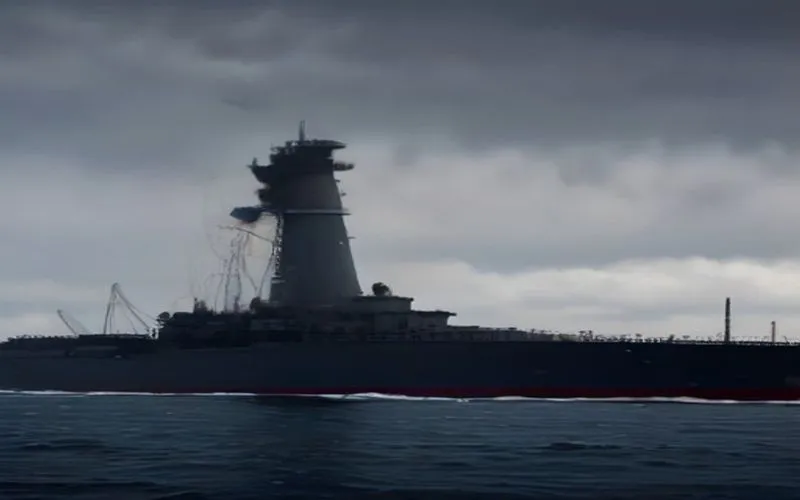
The United States Navy is facing a profound operational crisis driven by unprecedented maintenance backlogs within its attack submarine fleet. According to a comprehensive study by the Government Accountability Office (GAO), chronic delays in dry dock availability and shipyard capacity have severely limited the combat readiness of critical undersea assets. The report highlights that between 2016 and 2025, these systemic delays generated approximately $3.4 billion in costs to sustain crews and submarines that ultimately provided zero operational capability. For an overstretched and heavily tasked naval force, this loss of maritime power represents a critical vulnerability in global power projection and strategic deterrence.
The Mounting Cost of Active and Inactive Idle Time
The GAO report categorizes the submarine maintenance crisis into two distinct types of costly delays: active idle time and inactive idle time. Active idle time occurs when submarines and their fully trained crews are forced to remain pier-side because their dive certifications have expired while awaiting depot-level maintenance. Because these boats cannot be inducted into a shipyard schedule, the Navy continues to fund crew salaries and sustainment at staggering daily rates:
- Los Angeles-class submarines cost nearly $220,000 per day in active idle status.
- Virginia-class submarines incur costs exceeding $237,000 per day during active idle periods.
- The compounding financial strain creates a severe traffic jam as boats wait for limited dry dock space.
Compounding this issue is inactive idle time, which plagues nuclear-powered submarines awaiting final decommissioning. Between 2016 and 2025, waiting for a shipyard slot to defuel nuclear reactors cost an additional $722 million. For instance, the Los Angeles-class attack submarine USS Pasadena became inactive in January 2025 but faces a nearly four-year wait before entering the Norfolk Naval Shipyard in late 2028. Analysts warn that if current trends persist, the Navy will face 15 submarines and 14,000 days of inactive idle time between 2026 and 2030, accumulating an estimated $3.1 billion in unnecessary expenses.
Shipyard Infrastructure Constraints and Workforce Shortages
The root cause of these maintenance backlogs traces back to severe capacity constraints across the U.S. industrial base. Public naval shipyards—including Portsmouth, Norfolk, Puget Sound, and Pearl Harbor—along with private contractors like General Dynamics Electric Boat and Huntington Ingalls Industries, are grappling with aging infrastructure, skilled labor shortages, and supply chain bottlenecks for critical materials. Modernizing and expanding these industrial facilities is a multi-year endeavor that cannot provide immediate relief to an exhausted fleet. Consequently, submarines remain docked for prolonged durations, degrading sailor morale, tying up vital resources, and depriving combatant commanders of essential undersea capabilities in contested regions like the Indo-Pacific.
Potential Solutions and Strategic Alternatives for the U.S. Navy
To mitigate the escalating costs and fleet readiness degradation, Navy leadership is actively exploring alternative remediation strategies. One proposed solution involves permitting nuclear reactors to be defueled while submarines remain pier-side, circumventing the need to wait for a traditional dry dock slot. Another technical option includes utilizing floating dry docks to accelerate the defueling process. However, the GAO noted that defense officials have yet to provide detailed documentation on the technical feasibility and cost-effectiveness of these measures. Furthermore, while the Navy considers transferring crews from inactive boats to active platforms, the overarching lack of industrial capacity remains the primary limiting factor. As geopolitical tensions rise, resolving the submarine maintenance crisis is an urgent national security imperative to ensure the U.S. Navy retains its decisive undersea dominance.
Bu haber, Ajans Savunma editoryal standartları çerçevesinde Yapay Zeka destekli algoritmalar tarafından orijinal kaynaktaki teknik verilere sadık kalınarak yeniden derlenmiştir. Orijinal Kaynak: Defense News (Global)


Yorumlar (0)
Henüz yorum yapılmamış. İlk yorumu siz yapın!
Bir Yorum Bırakın