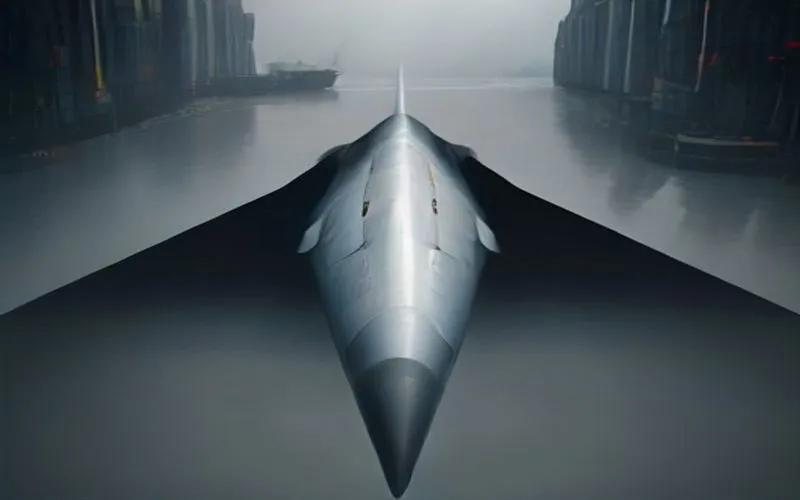
Europe is entering a critical and highly consequential period in the development of beyond-visual-range (BVR) air-to-air weapons. While recent headlines have focused heavily on emerging U.S. weapon systems, European defense entities are actively working on next-generation projects designed to vastly extend the reach, speed, and lethality of future air combat. The primary catalyst for this shift is the rapid evolution of foreign military capabilities, particularly advanced Chinese air-to-air missiles such as the PL-15, as well as combat experiences highlighting the strategic dangers of underestimating a long-range adversary.
The Shifting Threat Landscape and the Limitations of Current Systems
For years, the MBDA Meteor has served as the gold standard for European BVR weapons, utilizing an innovative ramjet propulsion system to retain high energy deep into an engagement. However, the operational environment is changing rapidly. While Meteor easily outperforms legacy Russian air-to-air systems, pacing threats like China's high-speed missiles have altered the tactical equation. Because weapons like the PL-15 can maintain extreme speeds over long distances, European defense planners face the genuine risk of a mutual-kill scenario if their retaliatory weapons arrive at slower terminal speeds. Consequently, future missile designs are shifting toward much higher overall velocities, energetic solid propellants, and multi-pulse motor technologies that reduce a target's reaction time.
French Comet and British FASE: Diverging National Pathways
To address these emerging threats, European nations are pursuing distinct acquisition and development pathways. France's secretive Comet program, led by the French branch of the MBDA consortium, appears tailored as a relatively near-term response targeting a deployment timeline around 2030. Designed to surpass the current MICA family in speed and range, Comet represents a swift adaptation to modern aerial engagements. Meanwhile, the United Kingdom's Future Air Superiority Effectors (FASE) program looks further ahead, aligning closely with the long-term requirements of the Global Combat Air Programme (GCAP) and the Tempest sixth-generation fighter jet. Although the UK and France recently launched a joint 12-month study to explore post-Meteor concepts, their ultimate operational timelines and strategic priorities show signs of divergence.
A Family of Networked Effectors for Future Air Combat
One of the most significant changes in next-generation European BVR weapons is the move away from a single, one-size-fits-all missile toward a diverse family of effectors. Future combat aircraft like Tempest will feature expansive internal weapons bays, allowing for significantly larger missile dimensions than those constrained by the F-35 or legacy fighters. This physical expansion enables larger rocket motors, advanced multi-mode seekers combining active radar with passive radio-frequency and imaging infrared capabilities, and multi-stage propulsion architectures. Furthermore, these upcoming weapons will operate as highly networked nodes within a broader kill chain. By leveraging offboard targeting data from collaborative combat aircraft (CCAs), early warning platforms, and space-based sensors, future European missiles will achieve unprecedented flexibility, ensuring air dominance in highly contested electromagnetic environments.
Bu haber, Ajans Savunma editoryal standartları çerçevesinde Yapay Zeka destekli algoritmalar tarafından orijinal kaynaktaki teknik verilere sadık kalınarak yeniden derlenmiştir. Orijinal Kaynak: The War Zone (Global)
Comments (0)
No comments yet. Be the first to comment!
Leave a Comment