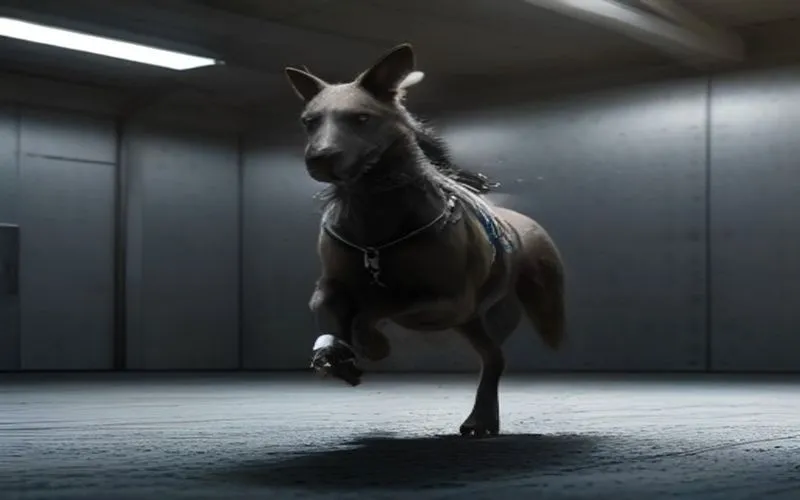
The rapid rise of China-based Unitree Robotics as a global leader in humanoid and quadruped systems has brought to light a significant vulnerability in Western strategic technology protection. According to defense technology experts and researchers involved in foundational projects, Unitree’s immensely popular robotic platforms trace their architectural blueprints directly back to breakthroughs funded by the U.S. military. While American laboratories and academic institutions pioneered the foundational mechanics of dynamic legged locomotion, structural deficiencies in U.S. industrial policy and venture capital ecosystems allowed Chinese manufacturers to rapidly scale and commercialize these critical technologies.
The U.S. Military Roots of Global Quadruped Designs
The foundational developments underpinning modern quadruped robots largely emerged from multi-year research initiatives sponsored by agencies such as the U.S. Army Research Laboratory (ARL) and the Defense Advanced Research Projects Agency (DARPA). Between 2010 and 2020, programs like the Robotics Collaborative Technology Alliance (RCTA) brought together elite institutions—including the University of Pennsylvania, the Massachusetts Institute of Technology (MIT), and NASA’s Jet Propulsion Laboratory—to pioneer advanced mobility algorithms and actuator designs.
- In 2016, University of Pennsylvania researchers eliminated heavy central gearboxes to place high-performance motors directly into robot legs.
- MIT labs subsequently developed groundbreaking platforms like the Mini Cheetah, boasting unprecedented agility and dynamic response capabilities.
- Academic theses and open-source technical publications detailing these actuator dimensions and control mechanics were subsequently leveraged abroad to accelerate foreign hardware engineering.
Scaling Disparities: Private Innovation Versus State-Directed Manufacturing
Despite pioneering the underlying hardware and software concepts, the United States has struggled to build a robust mass-production ecosystem for advanced robotics. Analysts note that U.S. venture capital heavily favors high-return software solutions rather than low-margin, capital-intensive manufacturing ventures. In stark contrast, China's state-directed industrial strategy utilizes targeted subsidies, comprehensive component supply chains, and tolerance for initial financial losses to rapidly transition research papers into mass-produced commercial hardware.
While American companies like Ghost Robotics supply ruggedized platforms such as the Vision 60 to specialized military units at higher price points, competitors like Unitree have successfully manufactured tens of thousands of consumer and enterprise units. This vast disparity in scaling capacity has left the Pentagon increasingly reliant on administrative trade restrictions—such as Federal Communications Commission bans on foreign-made robots—to mitigate national security risks.
Dual-Use Dilemmas and Future Strategic Implications
As quadruped systems transition from laboratory testbeds to operational deployment, the dual-use nature of these technologies has intensified geopolitical friction. Although companies like Unitree have publicly disclaimed military intentions and signed pledges against weaponization, documented instances of armed variants accompanying People’s Liberation Army troops in exercises have alarmed Western defense planners. Consequently, defense leaders emphasize that trade barriers alone will not suffice. Rebuilding a competitive Western robotics ecosystem will require deliberate supply chain diversification, deeper integration with allied manufacturing powerhouses such as South Korea, and streamlined pathways to translate domestic defense innovations into scalable commercial products.
Bu haber, Ajans Savunma editoryal standartları çerçevesinde Yapay Zeka destekli algoritmalar tarafından orijinal kaynaktaki teknik verilere sadık kalınarak yeniden derlenmiştir. Orijinal Kaynak: Defense News Global


Yorumlar (0)
Henüz yorum yapılmamış. İlk yorumu siz yapın!
Bir Yorum Bırakın