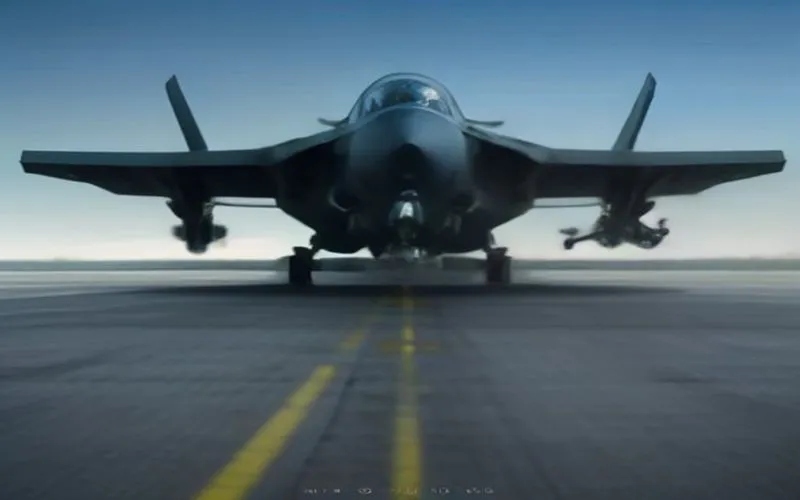
For years, defense analysts and satellite imagery sleuths have puzzled over unusual, fighter-like silhouettes appearing at remote Chinese airbases. The initial sighting in 2022 at Lintao Air Base revealed a shape that bore a loose resemblance to the People's Liberation Army Air Force's (PLAAF) premier stealth fighter, the J-20. A subsequent sighting in 2025 at Jining Qufu Airport brought similar objects back into the spotlight, sparking intense speculation across open-source intelligence communities regarding whether these frames were full-scale decoys, developmental prototypes, or something else entirely. However, recent images circulating on social media have effectively demystified these structures, confirming their true purpose as airfield firefighting training aids.
Understanding the Role of Aircraft Fire Trainers in Modern Militaries
Specialized aircraft fire trainers are a critical component of military and civilian aviation infrastructure globally. These structures do not need to be exact replicas; rather, they are designed to roughly mimic the dimensions and features of specific classes of aircraft—such as fighters, transport planes, or commercial airliners—to provide realistic scenarios for emergency response crews. They can range from repurposed airframe hulks to specially constructed metal mock-ups outfitted with propane-fueled fire simulation systems. The newly surfaced ground-level photographs of the Chinese training aid showcase features aligned with the object spotted at Jining Qufu Airport, including a modified diamond-like delta planform, canards, and twin vertical tails reminiscent of advanced domestic designs.
Expansion of China's Stealth Fleet and Support Infrastructure
The identification of these fire trainers coincides with the rapid, ongoing expansion of China's stealth fighter fleet. Estimates suggest that the PLAAF now operates upwards of 500 J-20 fighters distributed across multiple operational units and training bases, with projections pointing toward a potential inventory of 1,000 airframes by the end of the decade. As the volume of advanced tactical aircraft scales up, the logistical footprint required to sustain them grows proportionally. Routine flight operations, high sortie rates, and complex maintenance schedules inherently increase the risk of ground emergencies and flight-line incidents, necessitating robust, localized emergency response capabilities including specialized firefighting infrastructure.
Implications for Open-Source Intelligence and Future Developments
While the mystery of the J-20-like silhouettes has been largely put to rest, the incident underscores the challenges and pitfalls inherent in open-source intelligence (OSINT) analysis of heavily restricted nations. Observers frequently misinterpret specialized base infrastructure, maintenance frames, and training aids as active tactical hardware or strategic decoys. Nevertheless, as China continues to introduce cutting-edge aerospace projects—ranging from next-generation crewed fighters to sophisticated combat drones and flying wing concepts—the military aviation ecosystem will continue to evolve, bringing forth new and unfamiliar support assets that will undoubtedly capture the attention of global defense analysts.
Bu haber, Ajans Savunma editoryal standartları çerçevesinde Yapay Zeka destekli algoritmalar tarafından orijinal kaynaktaki teknik verilere sadık kalınarak yeniden derlenmiştir. Orijinal Kaynak: The War Zone (Global)


Comments (0)
No comments yet. Be the first to comment!
Leave a Comment