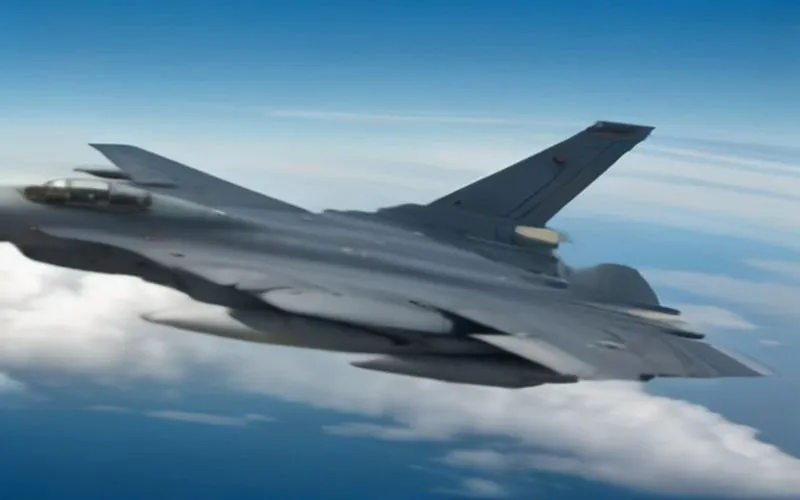
The appearance of Poland on a newly announced U.S. Department of Defense contract list for the Boeing F-15EX Eagle II program has generated intense speculation within the global defense community. The massive indefinite-delivery/indefinite-quantity (IDIQ) contract, valued at a staggering ceiling of $131.23 billion for the "F-15 Eagle Crest" program, explicitly lists Warsaw among potential Foreign Military Sales (FMS) customers alongside countries like Japan, Israel, and Saudi Arabia. Despite this formal inclusion, Polish defense officials have maintained that no formal acquisition process for the heavy multirole fighter has been initiated.
Understanding the F-15 Eagle Crest Framework Contract
The newly unveiled contract structure is designed to cover production, systems integration, modernization, upgrades, retrofits, sustainment, and depot-level maintenance capabilities for the global F-15 fleet through August 2037. Defense industry analysts emphasize that an IDIQ contract establishes a financial and logistical mechanism through which future orders can be placed, rather than representing an immediate, binding aircraft purchase by every nation named in the document. The $131.23 billion figure represents the maximum contractual ceiling for the entire program lifecycle rather than immediate active orders.
Alongside Poland, the Pentagon's FMS list includes major international operators such as South Korea, Singapore, Israel, Japan, and Saudi Arabia. Indonesia was previously slated as a prominent export customer for the F-15EX, but Boeing confirmed earlier in the year that Jakarta had officially abandoned those procurement plans after years of stagnation.
Poland’s Rapid Military Modernization and Fighter Fleet Strategy
Poland has embarked on one of the most ambitious military modernization and expansion programs in Europe following the escalation of regional tensions. Warsaw has already committed to acquiring two squadrons (32 aircraft) of fifth-generation F-35A Lightning II fighters, with local officials signaling intent to expand that fleet further. Additionally, the Polish Air Force is undertaking comprehensive upgrades for its legacy F-16C/D fleet and incorporating FA-50 light combat aircraft.
While the F-15EX could theoretically serve as an exceptional heavy complement to the stealthy F-35—offering massive payload capacities, long operating ranges, and heavy air-to-air missile carriage—the Polish Ministry of National Defence formally stated to defense media that the armed forces currently possess no plans to procure the aircraft.
The Apache Precedent: Why Observers Are Skeptical of Denials
Despite official denials from Warsaw, defense analysts point to striking historical precedents. In 2017, the U.S. Department of Defense similarly denied that Poland had selected the AH-64 Apache attack helicopter after it was named in a preliminary sensor contract. Shortly after those denials, Poland emerged as the largest international customer for the Apache, ultimately placing an order for 96 rotorcraft.
While Boeing representatives have reaffirmed that Poland has not yet finalized any decision regarding the F-15EX, its inclusion in the U.S. framework contract—coupled with intense industrial lobbying and previous flight evaluations by senior Polish military personnel—ensures that the possibility of a future heavy fighter procurement remains a compelling strategic development to monitor.
Bu haber, Ajans Savunma editoryal standartları çerçevesinde Yapay Zeka destekli algoritmalar tarafından orijinal kaynaktaki teknik verilere sadık kalınarak yeniden derlenmiştir. Orijinal Kaynak: The War Zone (Global)



Yorumlar (0)
Henüz yorum yapılmamış. İlk yorumu siz yapın!
Bir Yorum Bırakın