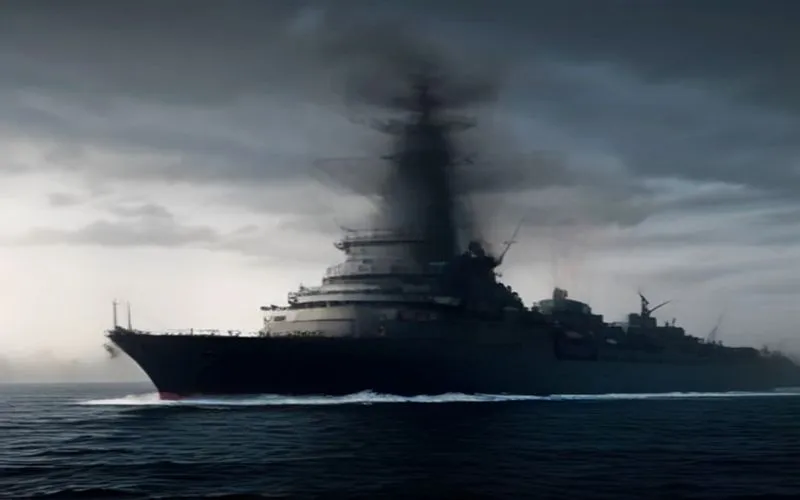
The Polish Navy has achieved a major milestone by launching its largest surface combatant since the interwar period. The new multirole frigate, named Wicher, was floated off a semi-submersible heavy-lift barge in the Gulf of Gdansk. Built locally by PGZ Stocznia Wojenna (PGZ SW) in Gdynia, the warship represents the vanguard of a wide-ranging modernization initiative designed to counter growing Russian military pressure in the strategic Baltic Sea region. As older Cold War-era platforms like the Oliver Hazard Perry-class frigates are phased out, the introduction of the Miecznik class marks a fundamental shift in Poland's naval power projection.
The Advanced Miecznik Class Design and Specifications
The Project 106 Miecznik (Swordfish) class is derived from Babcock International’s proven Arrowhead 140 design, which also forms the basis for the U.K. Royal Navy's Type 31 frigates and the Royal Danish Navy's Iver Huitfeldt class. These robust vessels feature a modular architecture with a length of 138 meters, a beam of approximately 20 meters, and a maximum displacement reaching roughly 7,700 tons. Powered by a combined diesel and diesel (CODAD) propulsion system, the frigates can achieve a top speed of 28 knots and boast an impressive maximum operational range of 8,000 nautical miles. Accommodating a core crew of 120 personnel alongside space for an additional 60 specialists, the ships are engineered for sustained high-end operations.
Cutting-Edge Weaponry and Combat Systems
Designed with a heavy emphasis on anti-air warfare (AAW) and anti-submarine warfare (ASW), the Wicher-class frigates possess an exceptionally heavy and versatile weapons suite. For air defense, the ships utilize MBDA’s Common Anti-air Modular Missile (CAMM) family, integrated into a 32-cell Mk 41 vertical launch system (VLS). This configuration allows for quad-packing, yielding a potential magazine depth of up to 128 missiles capable of defeating saturated drone and missile attacks. Surface strike capabilities are provided by eight stealthy Kongsberg Naval Strike Missiles (NSM), while close-in defense relies on a Leonardo 76mm Strales gun firing guided DART ammunition and locally produced OSU-35K 35mm remote weapon stations. Furthermore, the anti-submarine warfare suite includes MU90 Impact lightweight torpedoes and compatibility with embarked AW101 helicopters equipped for undersea surveillance.
Strategic Impact on NATO's Eastern Flank
The induction of these advanced frigates is a direct response to the shifting security architecture of Europe following Russia's full-scale invasion of Ukraine. With Finland and Sweden having joined NATO, Poland is positioning itself to anchor the alliance's maritime defense in the Baltic Sea against a capable Russian Baltic Fleet and persistent gray-zone provocations. While questions remain regarding personnel recruitment and logistical sustainment for such an ambitious naval expansion, the construction infrastructure established through the Miecznik program guarantees long-term industrial capability. Wicher is scheduled to undergo extensive outfitting, sea trials, and system integration before its planned commissioning in 2029, with the broader program slated for completion by the end of 2031.
Bu haber, Ajans Savunma editoryal standartları çerçevesinde Yapay Zeka destekli algoritmalar tarafından orijinal kaynaktaki teknik verilere sadık kalınarak yeniden derlenmiştir. Orijinal Kaynak: The War Zone (Global)



Yorumlar (0)
Henüz yorum yapılmamış. İlk yorumu siz yapın!
Bir Yorum Bırakın