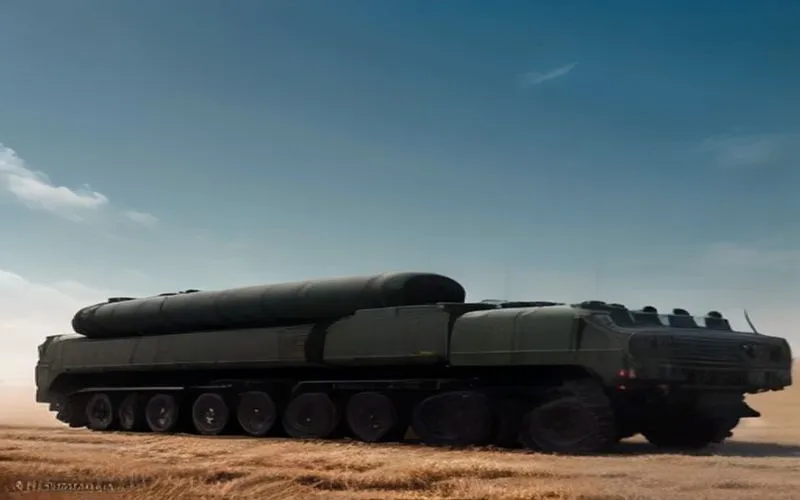
According to the Main Directorate of Intelligence of Ukraine (GUR), Russian forces have utilized a longer-range variant of the Iskander ballistic missile system during recent strikes on Kyiv. Known as the 9M723-1000 or Iskander-1000, this modernized short-range ballistic missile features an enlarged motor and launcher compartment, extending its operational range from approximately 390 kilometers to roughly 550 kilometers (341 miles). Military analysts note that firing from deeper within Russian territory significantly complicates Ukraine's defensive calculations and anti-missile operations.
Technical Advancements and Strategic Reach
The introduction of the Iskander-1000 follows years of steady development and post-INF Treaty shifts in tactical missile doctrines. By re-engineering the internal layout to increase propellant storage while maintaining a manageable outer mold line, Russian defense contractors have successfully stretched the weapon's reach. Defense experts point out that the missile retains its complex ballistic trajectory and mid-flight maneuvering capabilities, making it exceptionally difficult for conventional air defense systems like the Patriot to intercept consistently. Furthermore, reports indicate that production lines in Russia continue to churn out dozens of 9M723 variants monthly, sustaining a high tempo of strategic bombardment.
Countering the Threat at the Source
Faced with critically low stockpiles of advanced anti-ballistic missile interceptors, Ukrainian leadership has increasingly emphasized preemptive counter-force operations. The core objective of this emerging strategy is to hunt and destroy mobile launcher systems, transporter-erector-launchers (TELs), and associated supply infrastructure prior to launch. However, executing deep strikes inside Russian territory remains a formidable challenge. Restrictions on the operational use of commercial satellite communication networks such as Starlink over Russian border regions have further constrained Ukrainian long-range drone interdiction campaigns aimed at neutralizing these hardened artillery and missile assets.
Global Supply Chains and Foreign Components
An extensive forensic analysis conducted by GUR and published via its War & Sanctions portal revealed that the modernized Iskander missiles rely heavily on foreign-sourced technology. Despite sweeping international sanctions regimes, recovered missile components—particularly flight information processing units and laser gyroscope subassemblies—incorporate a significant percentage of microelectronics manufactured by firms based in the United States, Europe, and Asia. Intelligence assessments emphasize that dismantling or heavily disrupting these illicit procurement networks remains critical to curbing Moscow's capability to mass-produce advanced precision-guided munitions.
Bu haber, Ajans Savunma editoryal standartları çerçevesinde Yapay Zeka destekli algoritmalar tarafından orijinal kaynaktaki teknik verilere sadık kalınarak yeniden derlenmiştir. Orijinal Kaynak: The War Zone (Global)


Comments (0)
No comments yet. Be the first to comment!
Leave a Comment