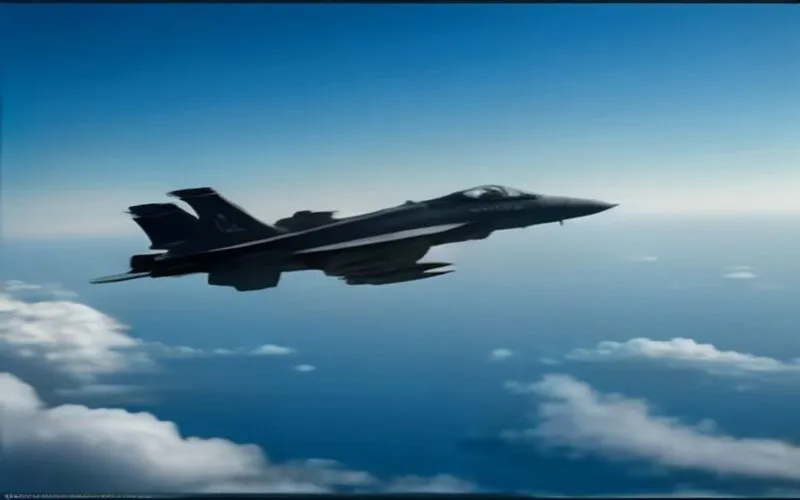
Swedish aerospace and defense company Saab has achieved a major milestone in its next-generation fighter aircraft program by successfully completing the maiden flight of the Gripen F, the tandem-seat variant of the single-seat Gripen E. Taking off from Saab’s airfield in Linköping, Sweden, the aircraft completed a successful 40-minute test flight that validated its preliminary flight performance and core avionics functionality.
Comprehensive Test Program and International Collaboration
Following this initial flight, the Gripen F will undergo an intensive flight test regimen managed by Saab’s Flight Test Center in Sweden. Engineers and test pilots will rigorously evaluate the aircraft's performance across various speeds and altitudes, its structural resilience against high G-forces, and its maneuverability in complex flight scenarios. Particular emphasis will be placed on assessing the tactical capabilities specific to the dual-seat configuration and the functionality of the rear cockpit.
Lars Tossman, Head of Saab Aeronautics, emphasized the strategic importance of this milestone for both Swedish and Brazilian defense teams. Noting that the aircraft was engineered to accelerate pilot training and enhance operational performance in advanced combat missions, the successful flight marks the culmination of extensive international engineering cooperation, prominently featuring the partnership between Sweden and the Brazilian Air Force.
Joint Development with Brazil
The Gripen F was developed as a collaborative initiative under the broader Brazilian Gripen Program. Over 350 Brazilian engineers, technicians, and pilots have actively participated in knowledge transfer, development, production, and maintenance training cycles. As the launch customer for the dual-seat variant, Brazil has played a pivotal role throughout the co-development process. Upon the successful conclusion of flight testing and formal acceptance procedures, the initial batch of Gripen F aircraft will be delivered to bolster the operational capabilities of the Brazilian Air Force.
Advanced Tactical Features and Propulsion
Sharing the same advanced avionics architecture, sensor suite, and weapon systems as the single-seat Gripen E, the Gripen F is built to execute diverse mission profiles, including air-to-air combat, air-to-ground strikes, and complex reconnaissance operations. Powered by a single General Electric F414G turbofan engine, the aircraft features ten external hardpoints capable of carrying a versatile payload of missiles, precision-guided bombs, targeting pods, and auxiliary fuel tanks. Notably, the Gripen family can carry up to seven Meteor beyond-visual-range air-to-air missiles alongside two IRIS-T short-range missiles.
The integration of an Active Electronically Scanned Array (AESA) radar, Infrared Search and Track (IRST) systems, and sophisticated electronic warfare suites ensures superior situational awareness. The rear cockpit acts as a force multiplier, allowing an instructor pilot to oversee training flights or enabling a second crew member to manage complex sensor fusion and weapon systems during high-tempo combat engagements.
This news article was compiled by AI-assisted algorithms under Ajans Savunma editorial guidelines, adhering to technical details from the original source. Original Source: SavunmaSanayiST

Comments (0)
No comments yet. Be the first to comment!
Leave a Comment