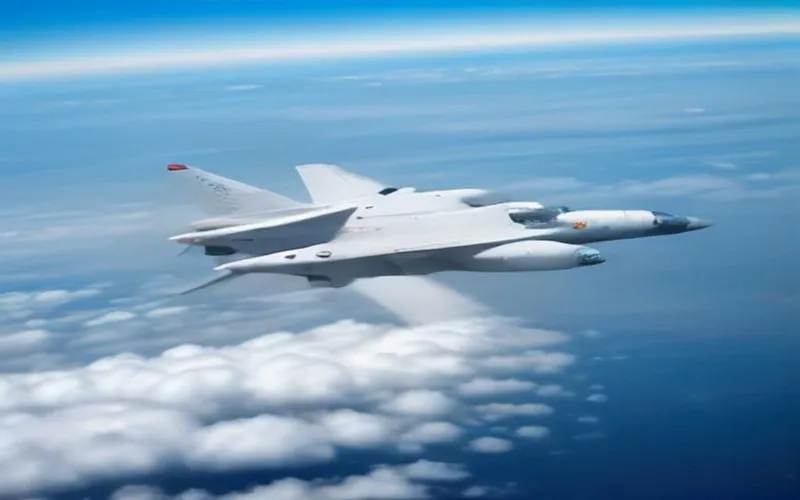
The U.S. Air Force is actively seeking a new family of aerial target systems capable of replicating an exceptionally broad spectrum of airborne threats. This initiative aims to address modern combat environments by simulating everything from micro-drones operating in dense swarms to advanced stealth fighters, large uncrewed aircraft, strategic bombers, and sophisticated airborne early warning and control platforms. As modern sensor technology and missile guidance systems become increasingly advanced, the military requires equally sophisticated test environments to ensure weapons effectiveness across the entire kill chain.
Bridging the Gap in Modern Aerial Target Capabilities
The core challenge outlined in the recent Air Force Request for Information (RFI) is balancing high-fidelity threat representation with cost-efficiency. Traditional full-scale aerial targets, such as converted QF-16 fighter jets, provide realistic performance but come with prohibitive operational costs and cannot be easily expended in large quantities. Furthermore, legacy platforms struggle to accurately replicate the low-observable radar cross-sections and multispectral infrared signatures characteristic of fifth-generation stealth aircraft. By developing a modular, cost-effective family of targets, the Air Force hopes to overcome these limitations and enable more aggressive, realistic live-fire testing scenarios.
Diverse Threat Categories and Performance Metrics
The proposed family of systems encompasses multiple distinct operational categories, each tailored to specific performance envelopes and physical dimensions:
- High-End Tactical Jets: Requirements call for supersonic performance exceeding Mach 1.6 at 40,000 feet, combined with high-agility and high-G combat maneuvers, alongside low-observable stealth profiles.
- Multi-Engine Transports and Bombers: Targets designed to match the physical scale, slow subsonic flight envelopes, and radar signatures of large aircraft like strategic bombers or heavy transport planes.
- Uncrewed Aerial Systems: Ranging from high-altitude Group 5 UAVs capable of operating up to 50,000 feet down to Group 1 and Group 2 systems capable of executing synchronized swarm tactics below 150 knots.
Leveraging Commercial Innovation and Scalability
Rather than initiating a traditional, expensive clean-sheet aircraft development program, the Air Force is explicitly inviting proposals from commercial, dual-use, and non-developmental technology sectors. The service seeks to exploit readily available manufacturing techniques, propulsion systems, and commercial components to achieve mass-production affordability. Successfully fielding this diverse fleet of targets will ultimately allow military engineers to thoroughly evaluate radars, infrared sensors, electronic warfare suites, and air defense networks against the complex, multi-layered aerial threats anticipated in future conflicts.
Bu haber, Ajans Savunma editoryal standartları çerçevesinde Yapay Zeka destekli algoritmalar tarafından orijinal kaynaktaki teknik verilere sadık kalınarak yeniden derlenmiştir. Orijinal Kaynak: The War Zone (Global)

Comments (0)
No comments yet. Be the first to comment!
Leave a Comment