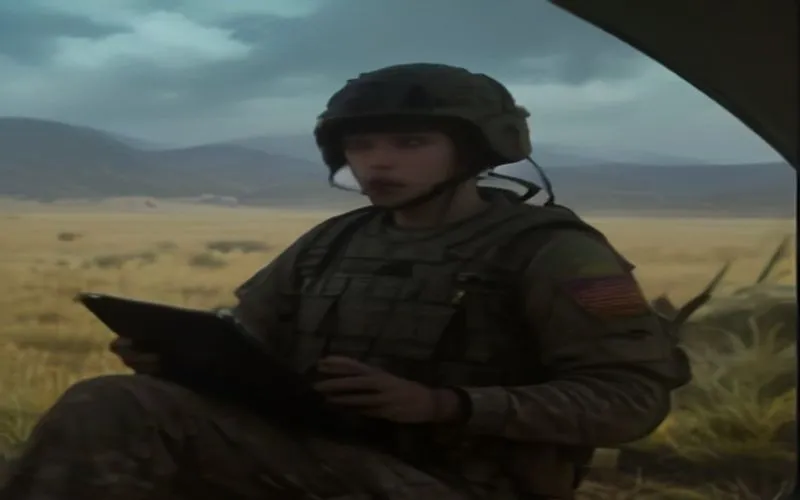
The United States Army is rapidly transforming its tactical communications and battlefield management through operational tests of the Next Generation Command and Control (NGC2) system. Working closely with the 25th Infantry Division (ID) stationed in Hawaii, the military is utilizing live-fire and field exercises, such as Exercise Balikatan in the Philippines, as an operational test bed to refine software capabilities in real time. Lockheed Martin serves as the Full Stack Operational Implementation Lead, bringing together traditional prime contractors, non-traditional innovators, and commercial technology providers to establish a unified, modular framework.
Shifting Paradigms with Modular Open Systems
Traditionally, military command and control (C2) systems relied heavily on platform-specific architectures with lengthy development and procurement cycles. The NGC2 initiative fundamentally breaks away from this model by employing a Modular Open System Approach (MOSA). This architecture dismantles legacy data silos and stovepipes, allowing sensors, fires, airspace data, and other critical battlefield elements to seamlessly communicate across all echelons.
By utilizing an adaptable data layer, the system ingests vast amounts of operational data and automatically routes it to the appropriate operators and applications based on pre-set rules. Furthermore, the open ecosystem allows the Army to easily onboard or offboard commercial vendors. More than 60 companies have contributed to the ecosystem, including Amazon Web Services (utilizing tools like Wickr Chat), Rune Technologies (providing TyrOS for contested logistics), and Striveworks (providing Stag for AI-assisted fires missions).
Accelerating Decisions with Artificial Intelligence
A core pillar of the NGC2 framework is the integration of artificial intelligence (AI) decision aids designed to compress sensor-to-shooter timelines. On the modern battlefield, commanders are often overwhelmed by data latency. The AI integrated into NGC2 combs through multi-domain data streams to correlate information and deliver actionable recommendations to commanders in seconds rather than minutes.
Crucially, the system acts as a force multiplier rather than an autonomous decision-maker. It filters the noise of the battlefield to ensure commanders receive the right information at the exact time it is needed. This capability was famously demonstrated during Lightning Surge exercises, where data sharing across the 25th ID in Hawaii and operational units in the Indo-Pacific region provided a unified, cloud-enabled operational picture.
Rapid Software Iteration and Soldier Feedback
Unlike traditional defense acquisition programs governed by rigid, pre-determined requirements, the NGC2 effort operates on broad strategic objectives. This agility allows software developers to implement soldier feedback within hours or days rather than years. A prime example of this rapid capability delivery occurred during Lightning Surge 4 at Schofield Barracks, where soldiers expressed a desire for hands-free operation.
- Soldiers requested voice-activated command integration instead of screen interaction.
- Engineers developed an AI-driven handheld microphone integrated with an Army edge device within days.
- The update successfully streamlined tactical operations by allowing hands-free interaction with the network.
Ultimately, the ongoing deployment of NGC2 highlights a profound shift in how the U.S. military develops and fields cutting-edge software. By prioritizing speed, modularity, and open architecture scalability, the Army is establishing a resilient foundation to counter emerging multi-domain threats across global theaters.
Bu haber, Ajans Savunma editoryal standartları çerçevesinde Yapay Zeka destekli algoritmalar tarafından orijinal kaynaktaki teknik verilere sadık kalınarak yeniden derlenmiştir. Orijinal Kaynak: Breaking Defense



Comments (0)
No comments yet. Be the first to comment!
Leave a Comment