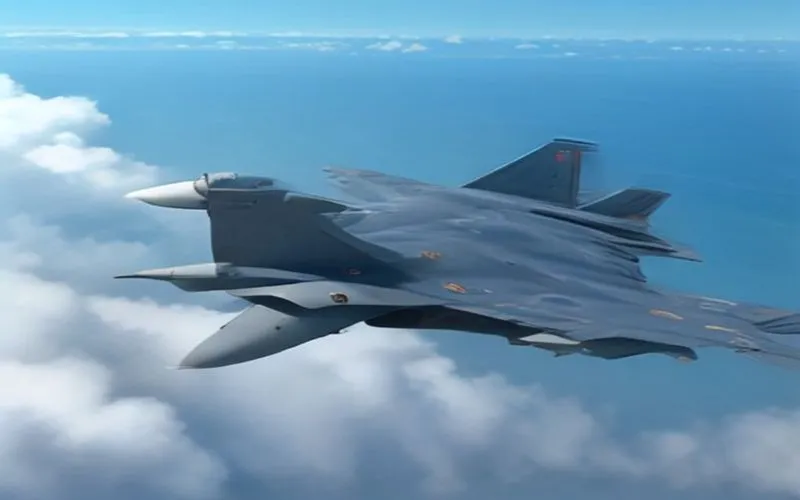
The United States Air Force has officially awarded Boeing a monumental sole-source contract featuring a staggering $131.23 billion ceiling to produce, modernize, and sustain the legendary F-15 fighter aircraft family. Designated as the F-15 Eagle Crest framework, this monumental agreement is structured to accommodate procurement demands for both U.S. forces and international allies through the year 2037. By consolidating manufacturing, software upgrades, structural retrofits, and comprehensive depot support into a single vehicle, the Air Force aims to streamline the operational lifecycle of one of the world's most capable air superiority platforms.
Comprehensive Production and Global Reach
Rather than locking the government into an immediate, fixed-quantity purchase, the framework allows the Air Force Life Cycle Management Center at Wright-Patterson Air Force Base to issue task orders incrementally. The overarching agreement encompasses support for the active-duty U.S. Air Force, the Air National Guard, and a substantial roster of Foreign Military Sales partners. Confirmed and prospective international operators slated under this expansive arrangement include key allies such as Japan, Israel, Saudi Arabia, South Korea, Singapore, Indonesia, and Poland, signaling enduring global demand for advanced variants like the F-15EX.
Modernization, Upgrades, and Fleet Expansion
Recent acquisition documentation highlights a notable expansion in the planned U.S. inventory, scaling the targeted F-15EX procurement significantly to bolster domestic air defense capacity. This expanded acquisition volume necessitates critical mid-cycle technology insertions, including advanced active electronically scanned array (AESA) radar updates, next-generation mission computers, highly resilient electronic warfare suites, and more powerful engines. Furthermore, the contract establishes pathways for organic depot maintenance, empowering Air Force maintenance personnel to execute heavy overhauls independently at domestic facilities in St. Louis rather than depending exclusively on contractor logistics support.
Addressing Supply Chain and Production Realities
Despite the long-term strategic stability this multi-year ceiling provides to Boeing’s lower-tier supply chain and manufacturing workforce, the program has faced notable headwinds. Operational scheduling adjustments have become necessary following localized industrial actions and subsequent supply chain friction, prompting defense officials to re-evaluate milestone targets like full operational capability. Nevertheless, the Eagle Crest contract reaffirms the enduring military value of the twin-engine airframe, ensuring that modernized fourth-generation-plus assets will continue to dominate contested airspace alongside fifth-generation fighters for decades to come.
This news article was compiled by AI-assisted algorithms under Ajans Savunma editorial guidelines, adhering to technical details from the original source. Original Source: Defense News (Global)

Comments (0)
No comments yet. Be the first to comment!
Leave a Comment