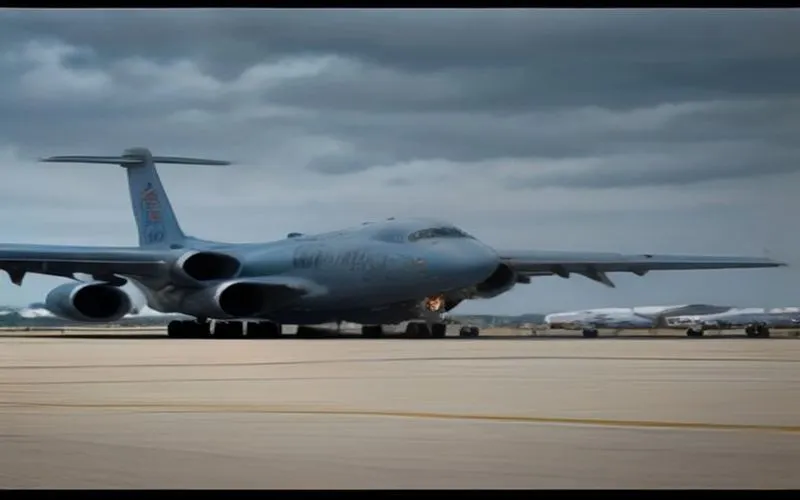
In an unexpected and highly unusual geopolitical development, a U.S. Air Force C-17 Globemaster III strategic airlifter touched down at Vnukovo International Airport in Moscow, Russia. Operating under the callsign REACH 4555, the aircraft's rare journey immediately caught the attention of global open-source intelligence (OSINT) communities, aviation trackers, and defense analysts worldwide. The flight path originated from Joint Base Andrews in Maryland via a stopover in Riga, Latvia, before crossing into Russian airspace—a route virtually unprecedented for active-duty U.S. military transport assets amidst the ongoing war in Ukraine and deeply strained bilateral relations.
The Route, Capabilities, and Security Protocols
The deployment of a heavy transport aircraft like the C-17 for a high-stakes diplomatic or intelligence mission highlights the unique operational requirements of transporting senior officials into potentially sensitive or hostile environments. Departing from Joint Base Andrews, the hub of the 89th Airlift Wing, the aircraft was uniquely positioned to support high-priority special air missions. The C-17 Globemaster III is regularly equipped with advanced defensive suites, including the Large Aircraft Infrared Countermeasure System (LAIRCM) and expendable flare dispensers to counter potential surface-to-air threats.
Furthermore, such strategic transports can be configured with Roll-On Conference Capsules (ROCC), serving as mobile, secure SCIFs (Sensitive Compartmented Information Facilities) complete with encrypted data, voice, and video teleconferencing capabilities. These systems allow top-tier government officials and military leaders to conduct secure operational communications while traversing international airspace. Ground observers in Riga also noted the potential presence of a supporting U.S. Air Force C-40B executive transport, further underscoring the high-level nature of the diplomatic delegation.
Geopolitical Context and High-Level Delegations
As speculation mounted regarding the purpose of the Moscow landing, major news networks including CBS and CNN—citing anonymous official sources—confirmed that the flight transported CIA Director John Ratcliffe to the Russian capital for undisclosed meetings. This high-profile visit marks a critical moment in U.S.-Russian diplomatic channels, occurring against the backdrop of stalled peace negotiations and shifting dynamics in the ongoing conflict between Russia and Ukraine. Reports from outlets like the Financial Times also indicated that Washington requested temporary operational pauses from Kyiv regarding long-range drone and missile strikes in northern Russian sectors to ensure the safe passage of the diplomatic aircraft.
While Kremlin spokespersons initially claimed no prior knowledge of the meetings or official scheduling, the sighting of American diplomatic motorcars moving through Moscow streets confirmed intense backchannel diplomacy. Whether the mission involves prisoner exchange negotiations, strategic warnings regarding regional escalation, or exploratory frameworks for future diplomatic openings, the deployment of a frontline U.S. military cargo aircraft into the heart of Moscow signals a monumental shift in active-channel communication between the two nuclear superpowers.
Bu haber, Ajans Savunma editoryal standartları çerçevesinde Yapay Zeka destekli algoritmalar tarafından orijinal kaynaktaki teknik verilere sadık kalınarak yeniden derlenmiştir. Orijinal Kaynak: The War Zone (Global)


Yorumlar (0)
Henüz yorum yapılmamış. İlk yorumu siz yapın!
Bir Yorum Bırakın