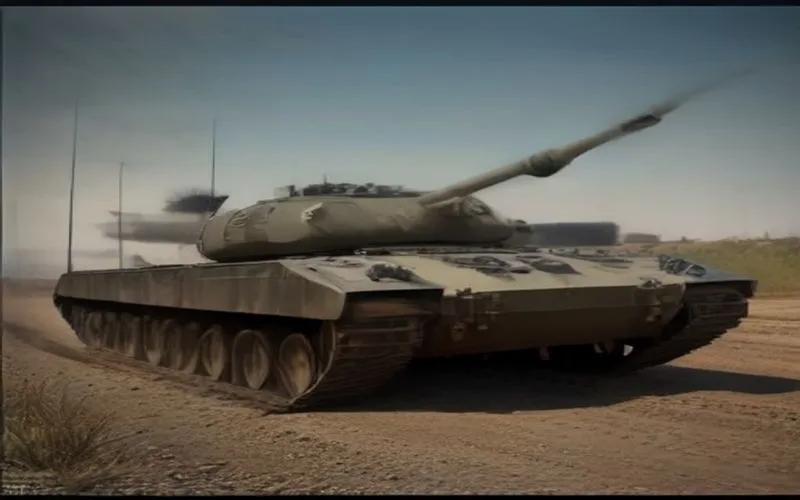
The United States Army is currently navigating a severe readiness crisis concerning its legacy ground vehicle fleet, driven largely by persistent supply chain bottlenecks and component obsolescence. While future modernization programs—such as the upcoming M1E3 Abrams main battle tank and the XM30 Infantry Fighting Vehicle—promise advanced capabilities on the horizon, senior leadership acknowledges that these next-generation platforms will not be fielded fast enough to replace current inventories immediately. Consequently, the military must maintain and sustain its existing tactical wheeled and tracked vehicles for decades to come, forcing the service to confront deep-seated supply chain vulnerabilities head-on.
Addressing Obsolescence and Supply Chain Bottlenecks
In an interview at the recent GVSETS conference, Brig. Gen. Beth Behn, commanding general of the U.S. Army’s Tank-Automotive and Armaments Command (TACOM), emphasized the sheer scale of the challenge. The command is responsible for managing the sustainment of the Army's extensive ground vehicle inventory, which spans numerous legacy platforms facing critical parts shortages. Rather than relying solely on traditional procurement channels, TACOM is actively casting a wider net to solve component shortages. This includes exploring alternative suppliers, integrating advanced manufacturing techniques, and sourcing raw materials from non-traditional defense vendors to overcome production hurdles tied to crucial subcomponents like the Honeywell Aerospace AGT1500 engine.
Innovative Approaches: The TIGER Hackathon Model
To accelerate problem-solving and mitigate supply chain choke points, TACOM has initiated collaborative industry events, most notably the TIGER hackathon. Bringing together high-level military officials, original equipment manufacturers (OEMs) like Honeywell, and over 40 distinct commercial vendors, the initiative successfully achieved multiple strategic goals. The exercise focused heavily on establishing secondary sources for vulnerable engine subcomponents, identifying firms capable of complex advanced manufacturing, and securing reliable raw material providers. According to military leadership, the success of this model has proven that expanding the supply network beyond standard defense contractors is a viable strategy for overcoming long-term obsolescence issues across multiple vehicle systems.
Strengthening Defense Logistics and Early Acquisition Integration
Beyond targeted industry workshops, TACOM is forging a much closer operational relationship with the Defense Logistics Agency (DLA), an organization that manages approximately 80 percent of the repair parts required for TACOM-managed platforms. By sharing advanced data analytics tools and establishing clearer demand signals, the Army aims to provide the DLA with enhanced visibility into future requirements and supply chain depth. Furthermore, structural changes within the Army’s acquisition offices are placing sustainment considerations at the very beginning of the development lifecycle. With logistics and maintenance experts actively participating in early-stage design and acquisition discussions for upcoming platforms like the M1E3 Abrams and XM30, the military hopes to avoid repeating historical readiness pitfalls and ensure long-term operational sustainability.
Bu haber, Ajans Savunma editoryal standartları çerçevesinde Yapay Zeka destekli algoritmalar tarafından orijinal kaynaktaki teknik verilere sadık kalınarak yeniden derlenmiştir. Orijinal Kaynak: Breaking Defense



Yorumlar (0)
Henüz yorum yapılmamış. İlk yorumu siz yapın!
Bir Yorum Bırakın