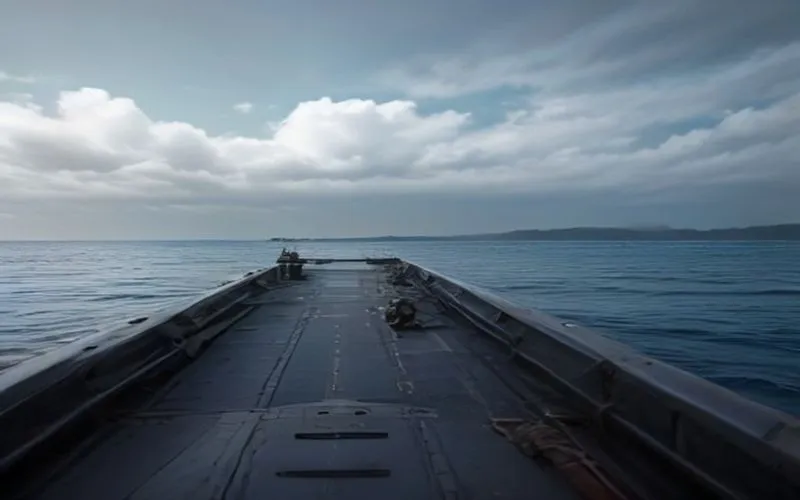
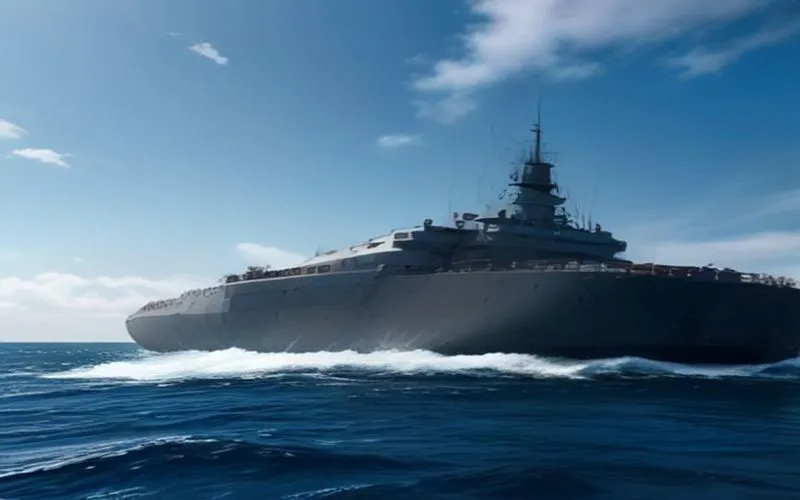
The United States Marine Corps has achieved a major milestone in its ongoing amphibious modernization efforts by receiving its first Ancillary Surface Craft (ASC). Developed by Australia-headquartered firm Birdon, the newly revealed medium landing craft—designated as ASC-1—was showcased during a distinguished visitor day event in Bayou La Batre, Alabama. This specialized vessel is designed to enhance the service's capability to execute distributed maritime operations and sustainment missions in highly contested littoral environments without relying on traditional, high-value naval assets.
Strategic Role in Expeditionary Advanced Base Operations
The introduction of the ASC directly supports the Marine Corps' evolving doctrine known as Expeditionary Advanced Base Operations (EABO). Under this strategic framework, the military aims to rapidly position and reposition relatively small, highly agile units across far-flung forward locations, particularly the myriad small islands scattered throughout the Indo-Pacific region. These 'stand-in forces' act as a vital forward deterrent and create immense targeting dilemmas for potential adversaries. By utilizing smaller, distributed platforms like the ASC, the Marine Corps can bypass the need for traditional, vulnerable ports and large amphibious warfare ships, ensuring continuous logistics flow in austere theaters.
Advanced Technical Capabilities and Design Features
Engineered for demanding ocean transits and littoral maneuver, the ASC boasts robust specifications tailored for modern amphibious warfare. The vessel is fully operational in Sea State 5 and engineered to survive extreme conditions up to Sea State 7. Measuring approximately 150 feet in length and 30 feet across, the open-deck craft can transport up to 40 combat-loaded Marines alongside roughly 46 to 54 tons of tactical cargo.
- Advanced forward-looking sonar for navigating uncharted, very shallow littoral waters.
- A specialized bow ramp designed to drop directly onto unimproved and unsurveyed beaches.
- Cutting-edge fuel delivery and transfer systems to support extended operational range.
Future Integration and Hybrid Crewing Assessments
Following its formal technical acceptance, the ASC-1 is transitioning into limited technical assessments overseen by the Marine Corps Warfighting Laboratory. The initial operations will utilize a hybrid crewing approach, pairing active-duty Marines with experienced contracted mariners and Australian Army personnel to ensure seamless knowledge transfer. As the U.S. Navy and Marine Corps continue to refine programs like the Medium Landing Ship (LSM), versatile connectors like the ASC will serve as the crucial 'last tactical mile' enablers for future distributed naval campaigns.
Bu haber, Ajans Savunma editoryal standartları çerçevesinde Yapay Zeka destekli algoritmalar tarafından orijinal kaynaktaki teknik verilere sadık kalınarak yeniden derlenmiştir. Orijinal Kaynak: The War Zone (Global)


Comments (0)
No comments yet. Be the first to comment!
Leave a Comment