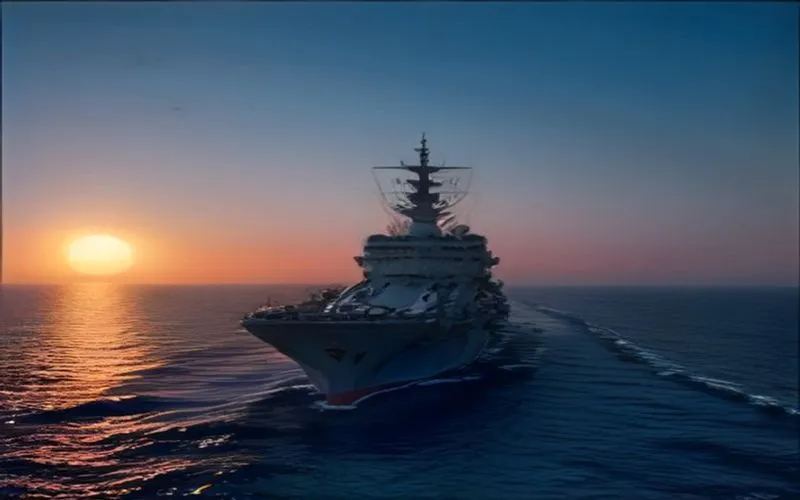
The arrival of the nuclear-powered aircraft carrier USS George Washington in the U.S. Central Command (CENTCOM) region marks yet another chapter in the escalating operational stress facing the United States Navy's carrier fleet. Transiting the Arabian Sea after its departure from Yokosuka, Japan, the carrier was rushed to the Middle East to relieve the exhausted crew of the USS Abraham Lincoln. This deployment highlights the delicate balancing act military planners must maintain between addressing active geopolitical flashpoints in the Middle East and preserving strategic deterrence in the Indo-Pacific region.
The Strategic Fallout of Extended Carrier Deployments
Extended operational tempos and back-to-back deployments have severely impacted sailors, Marines, and the material condition of the ships themselves. The USS Abraham Lincoln endured grueling conditions with months of continuous operations without port calls, sparking widespread discussions regarding crew welfare and combat readiness. Furthermore, shifting the USS George Washington to CENTCOM temporarily leaves U.S. Indo-Pacific Command (PACOM) without dedicated carrier strike group coverage. This absence complicates regional deterrence against potential adversaries like China and North Korea, raising serious concerns among national security strategists regarding the thin margins of American maritime power projection.
Maintenance Backlogs and Yard Delays
The relentless deployment cycle has severe ripple effects on shipyard availability and long-term fleet maintenance. When supercarriers remain deployed beyond their standard six-to-seven-month windows, scheduled maintenance periods are inevitably compressed or delayed. Shipyards capable of handling nuclear supercarriers are already operating at maximum capacity. Extended cruises translate directly to exponentially longer stays in dry docks, creating a compounding backlog that sidelines vital naval assets for months or even years beyond their original timelines. Maintenance challenges encountered by vessels like the USS Gerald R. Ford and the ongoing Refueling and Complex Overhaul (RCOH) of the USS John C. Stennis further exacerbate these systemic shipyard bottlenecks.
Future Fleet Modernization and Programmatic Hurdles
Beyond current operational deployments, the broader carrier force faces structural hurdles regarding future construction and class modernization. The introduction of the next-generation Ford-class carriers has encountered notable delays. For instance, the future USS John F. Kennedy has faced repeated delivery pushbacks tied to the integration and certification of advanced technologies such as the Advanced Arresting Gear and Advanced Weapons Elevators. As the U.S. Navy evaluates potential design adjustments for subsequent hulls like the future USS Doris Miller, balancing technological advancement with timely fleet recapitalization remains a formidable challenge for naval leadership.
Bu haber, Ajans Savunma editoryal standartları çerçevesinde Yapay Zeka destekli algoritmalar tarafından orijinal kaynaktaki teknik verilere sadık kalınarak yeniden derlenmiştir. Orijinal Kaynak: The War Zone (Global)

Yorumlar (0)
Henüz yorum yapılmamış. İlk yorumu siz yapın!
Bir Yorum Bırakın