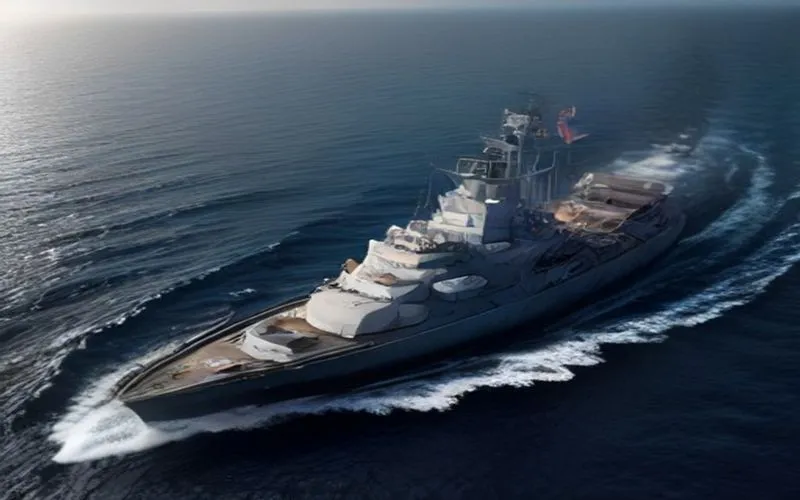
The USS Benfold, an Arleigh Burke-class guided-missile destroyer belonging to the U.S. Navy, recently experienced a critical engineering casualty that left the vessel completely without power for four days while operating in the Indo-Pacific region. According to U.S. 7th Fleet spokesperson Cmdr. Matthew Comer, the generator failure occurred on July 24 during routine operations, forcing the warship into a prolonged blackout that heavily disrupted daily life aboard. Without electrical power, the crew was temporarily left without potable water, galley services, functional sanitation facilities, and air conditioning in a demanding maritime environment.
Engineering Casualty and Emergency Response
The severity of the power failure necessitated external logistical support from the George Washington Carrier Strike Group. The Ticonderoga-class guided-missile cruiser USS Robert Smalls stepped in to provide emergency provisions, including prepared meals for the stranded crew. As the situation persisted, contracted tugboats were deployed to tow the disabled destroyer into Subic Bay in the Philippines on July 28. Upon arrival, specialized engineering teams from the Ship Repair Facility-Japan Regional Maintenance Center immediately boarded the vessel to assess the damage and oversee the restoration process.
Repair Timeline and Fleet Readiness
Despite the challenging conditions, naval officials praised the crew's resilience and professionalism throughout the ordeal. By July 30, primary power was successfully restored to the ship, and the crew was provided with temporary off-board lodging and fresh food supplies in the Philippines. Comprehensive diagnostic checks and engineering repairs continued over the following weeks, ensuring that all combat systems, propulsion, and crew support frameworks were fully operational before the ship officially departed Subic Bay on August 8.
Broader Implications for Naval Operations
This unexpected engineering mishap has drawn renewed attention to the operational strains and maintenance challenges currently facing surface combatants deployed in high-tempo strategic regions like the South China Sea. The incident is currently under formal investigation by the U.S. Navy to determine the exact root cause of the generator failure. It also intersects with broader congressional inquiries regarding extended deployment schedules, basic supply chain logistics, and crew welfare across various active surface and aviation strike groups.
Bu haber, Ajans Savunma editoryal standartları çerçevesinde Yapay Zeka destekli algoritmalar tarafından orijinal kaynaktaki teknik verilere sadık kalınarak yeniden derlenmiştir. Orijinal Kaynak: Defense News Global


Yorumlar (0)
Henüz yorum yapılmamış. İlk yorumu siz yapın!
Bir Yorum Bırakın