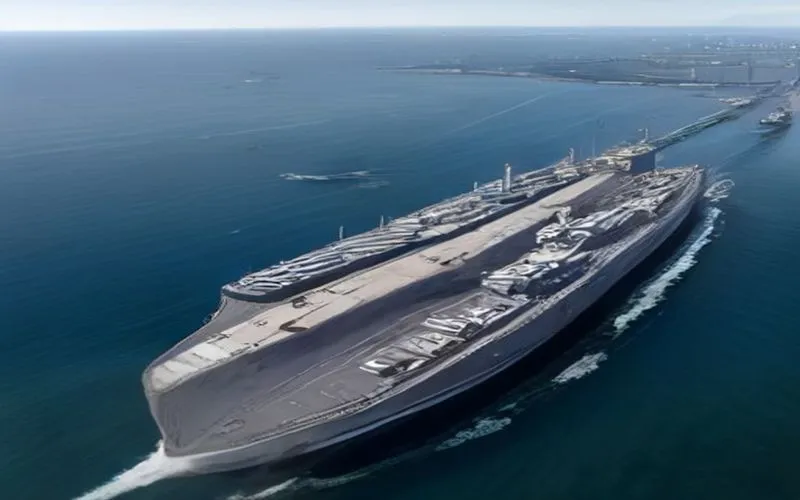
President Donald Trump has called for the establishment of a fifth public shipyard to expand repair and maintenance capacity for the United States Navy's nuclear-powered aircraft carriers and submarines. The initiative was officially revealed in a National Security Presidential Memorandum, instructing Defense Secretary Pete Hegseth to submit a comprehensive proposal within 120 days. While the push intends to bolster fleet readiness and support future shipbuilding goals, defense analysts emphasize that the endeavor will face immense financial and logistical roadblocks.
The Steep Financial Cost and Timeline
Building a new nuclear-capable public shipyard is an extraordinarily capital-intensive undertaking. Experts from the Congressional Budget Office (CBO) estimate that creating a facility capable of servicing nuclear-powered vessels could easily range between $10 billion and $20 billion in current dollars. Furthermore, the timeline for such a massive infrastructure project would span at least a decade, if not longer. This temporal gap means the new yard would offer little immediate relief to the Navy's current maintenance backlogs.
The Persistent Workforce Crisis
Beyond the price tag, industry experts point out that the most critical bottleneck facing naval maintenance is not a lack of physical dry docks, but a severe shortage of skilled labor. Recruitment and retention remain alarming issues across existing public shipyards. Data indicates that first-year employee attrition rates can reach as high as 50 to 60 percent, driven heavily by compensation challenges and demanding work environments. Analysts like Bradley Martin from RAND argue that simply building a new facility does not magically generate the thousands of specialized technicians required to operate it.
Strategic Focus on the Indo-Pacific
The presidential memorandum explicitly highlights the need for sufficient dry dock capacity proximate to the United States Pacific Fleet. Potential locations span the continental United States, Alaska, Hawaii, and US territories. This geographic focus underscores Washington's strategic pivot toward the Indo-Pacific region, where countering near-peer adversaries demands maximum operational availability from fast-attack submarines and carrier strike groups. Nevertheless, lawmakers and the administration must carefully weigh whether to fund an entirely new facility or prioritize ongoing modernization efforts like the Shipyard Infrastructure Optimization Program (SIOP).
Bu haber, Ajans Savunma editoryal standartları çerçevesinde Yapay Zeka destekli algoritmalar tarafından orijinal kaynaktaki teknik verilere sadık kalınarak yeniden derlenmiştir. Orijinal Kaynak: Breaking Defense
Yorumlar (0)
Henüz yorum yapılmamış. İlk yorumu siz yapın!
Bir Yorum Bırakın