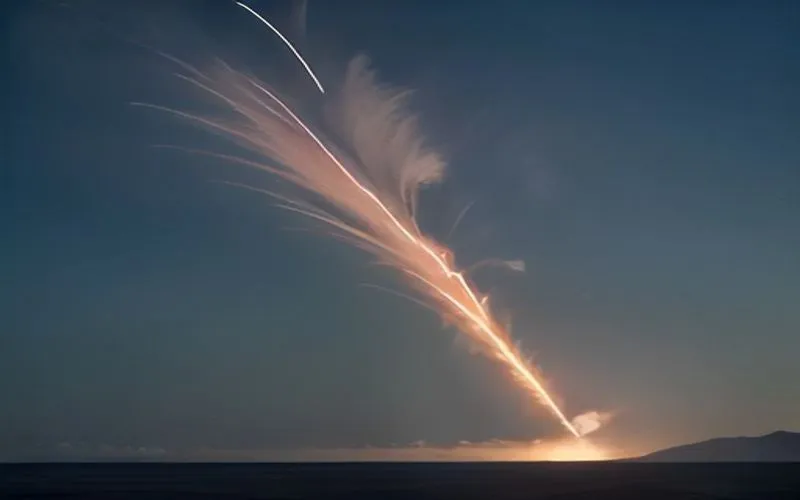
The aerospace and defense sectors are witnessing a transformative period as commercial launch providers scale up their operations to meet unprecedented global demand. At the forefront of this expansion is NASA’s Wallops Flight Facility in Virginia, which is projected to experience a significant surge in launch cadence over the next few years. Driven by companies such as Firefly Aerospace and Rocket Lab expanding their footprints, the facility is transitioning from a secondary testing ground into a premier East Coast spaceport capable of handling frequent orbital and suborbital missions.
Expanding Launch Cadence and Strategic Importance
Recent data underscores the rapid transformation underway at Wallops. According to a NASA Office of Inspector General report, annual launches from the facility—including pads operated by the Virginia Spaceport Authority—are projected to skyrocket from 17 missions in 2025 to 44 by 2030. This impressive growth trajectory encompasses everything from traditional orbital missions to critical suborbital testing, including Rocket Lab’s HASTE vehicle, which frequently supports hypersonic research.
Industry leaders have pointed out that primary launch locations, such as Cape Canaveral Space Force Station in Florida, are facing severe capacity constraints and congestion. By comparison, Wallops offers a scalable alternative with fewer bottlenecks. Companies like Firefly Aerospace are leveraging Wallops to launch both their small Alpha rockets and upcoming medium-class Eclipse vehicles starting around 2027, effectively establishing the facility as an equal counterpart to traditional launch hubs rather than merely a relief valve.
Infrastructure Challenges and Operational Efficiency
Scaling up to a potential cadence of one launch per week places immense pressure on existing infrastructure. Unlike mega-complexes with vast expanses between pads, Wallops operates within a compact footprint where launch pads are separated by feet rather than miles. This spatial constraint requires meticulous scheduling and streamlined range operations.
To meet this challenge, facility leadership has implemented rigorous operational efficiency frameworks, such as Lean Six Sigma exercises conducted in partnership with Rocket Lab, which have successfully halved certain support costs. However, technical infrastructure is only part of the equation. Stakeholders emphasize that utilities, wastewater treatment systems, redundant power grids, and internal logistics must be vastly upgraded to sustain a high-frequency launch tempo.
Regional Development and Social Infrastructure Needs
The economic impact of the Wallops expansion extends far beyond the perimeter fence, directly affecting surrounding communities in Virginia and Maryland where the aerospace workforce resides. Local government officials highlight that regional development must keep pace with industrial growth to attract and retain top-tier engineering and technical talent.
- Housing and Communities: A shortage of affordable housing remains an immediate bottleneck for incoming aerospace workers and their families.
- Commercial Amenities: Expanding childcare services, healthcare facilities, and around-the-clock dining options are critical for personnel working unconventional late shifts during launch campaigns.
- Transportation Networks: Maintaining and improving regional roads, airports, and port connections is vital for seamlessly transporting heavy aerospace hardware and personnel across state lines.
Ultimately, the coordinated efforts between NASA, commercial space providers, and local municipal governments aim to cement Wallops Flight Facility as a cornerstone of the United States' eastern launch infrastructure. By addressing both the technical demands of frequent flight campaigns and the social infrastructure required by a growing workforce, Wallops is well-positioned to shape the future of American access to space and defense capabilities.
Bu haber, Ajans Savunma editoryal standartları çerçevesinde Yapay Zeka destekli algoritmalar tarafından orijinal kaynaktaki teknik verilere sadık kalınarak yeniden derlenmiştir. Orijinal Kaynak: SpaceNews

Comments (0)
No comments yet. Be the first to comment!
Leave a Comment